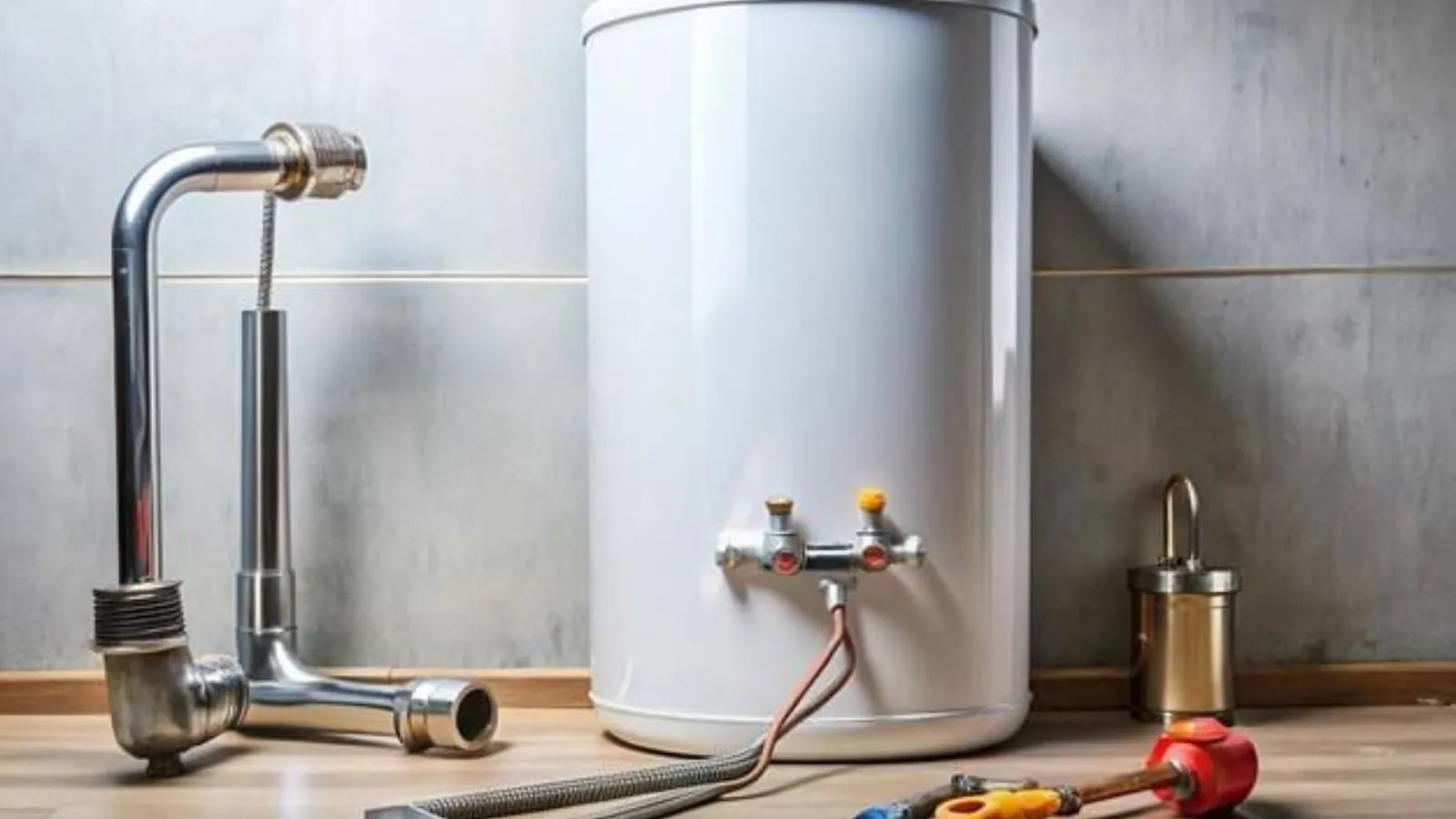
A water heater leak is an emergency because a standard tank holds dozens of gallons and a failure can add household supply pressure behind it. If your water heater is leaking in Arlington Heights, shut off the cold water supply valve on top of the unit, turn off the power or gas to it, and call the 24/7 line at (833) 521-1033. Do not touch the unit if standing water reaches electrical connections.
This page is about the water and the damage around the heater. Replacing or repairing the tank is plumbing work for a licensed plumber. The cleanup crew removes water, dries walls and floors and documents the loss, and can coordinate timing so the plumber is not delayed. If the supply line is the problem, see burst pipe water damage.
Water heater failures that cause damage
Cause changes how much water is released.
Tank rupture
A corroded or failed tank can release most of its volume quickly. Water spreads across the room and into adjacent walls.
Failed drain valve or fitting
Slower, but it can run unnoticed for hours and soak the subfloor.
Relief valve discharge
A relief line that drips onto flooring causes slow damage under finished floors.
Slow weep at the base
Rust marks and puddles signal a tank near failure. Do not wait for a full release.
Heater leaking now?
Shut off the supply and power, then call the 24/7 line to start extraction.
Shutting it down safely
Find the cold water inlet valve above the heater and turn it clockwise. For electric units, switch off the dedicated breaker only if the panel is dry and reachable. For gas units, turn the gas control to off and, if you smell gas, leave the house and call the gas utility or 911 first.
Then open a hot faucet upstairs so the tank does not siphon more water onto the floor. Keep children and pets out of the water. If the heater sits in a finished basement, expect water to run beneath flooring and baseboards toward the low point.
Typical damage by location
Where the tank stands changes what gets wet.
| Location | What gets wet | Cleanup focus |
|---|---|---|
| Unfinished basement or utility room | Concrete, stored boxes, wall base | Extraction and drying of drywall base, see basement water damage |
| Finished basement | Carpet, pad, drywall, trim | Extraction, pad removal, structural drying |
| Closet or first floor | Hardwood or laminate, subfloor | Drying and floor assessment, see hardwood floor repair |
| Attic or upper floor | Ceiling below | See ceiling water damage repair |
Water heater leak cleanup process
Drying begins as soon as the water is out.
- 1
Extract
Standing water is pumped or wanded out.
- 2
Assess
Moisture readings define wet drywall, trim and floor.
- 3
Remove
Saturated materials that cannot dry are removed.
- 4
Dry
Air movers and dehumidifiers run until readings are normal.
Hot water means extra care
Water that leaks from a heater may be hot, which scalds skin and softens some building materials. Wait for it to cool or wear boots, and avoid direct contact. Hot water also raises humidity, so drying equipment is placed earlier to manage vapor in the room.
What shapes water heater leak cleanup cost
A tank leak is usually a contained job. The scope names the rooms and materials before work starts.
Insurance note: sudden tank failures are often treated as accidental water damage, though the heater itself usually is not covered for wear. Report the loss promptly and keep the failed unit if your insurer asks. Calling (833) 521-1033 starts the scope conversation.
Water Heater Leak Cleanup questions from Arlington Heights homeowners
Is someone available when a water heater fails on a weekend?
Yes. The 24/7 line is open every hour. Shut off the supply, then call.
Do you replace the water heater?
No. A licensed plumber replaces or repairs the unit. The cleanup crew handles water removal, drying and documentation.
How long does it take to dry after a tank leak?
Many jobs take several days, depending on materials and readings.
Is a slow leak under the heater urgent?
Yes. A weeping tank can fail suddenly. Shut off the supply and call a plumber while the area is dried.