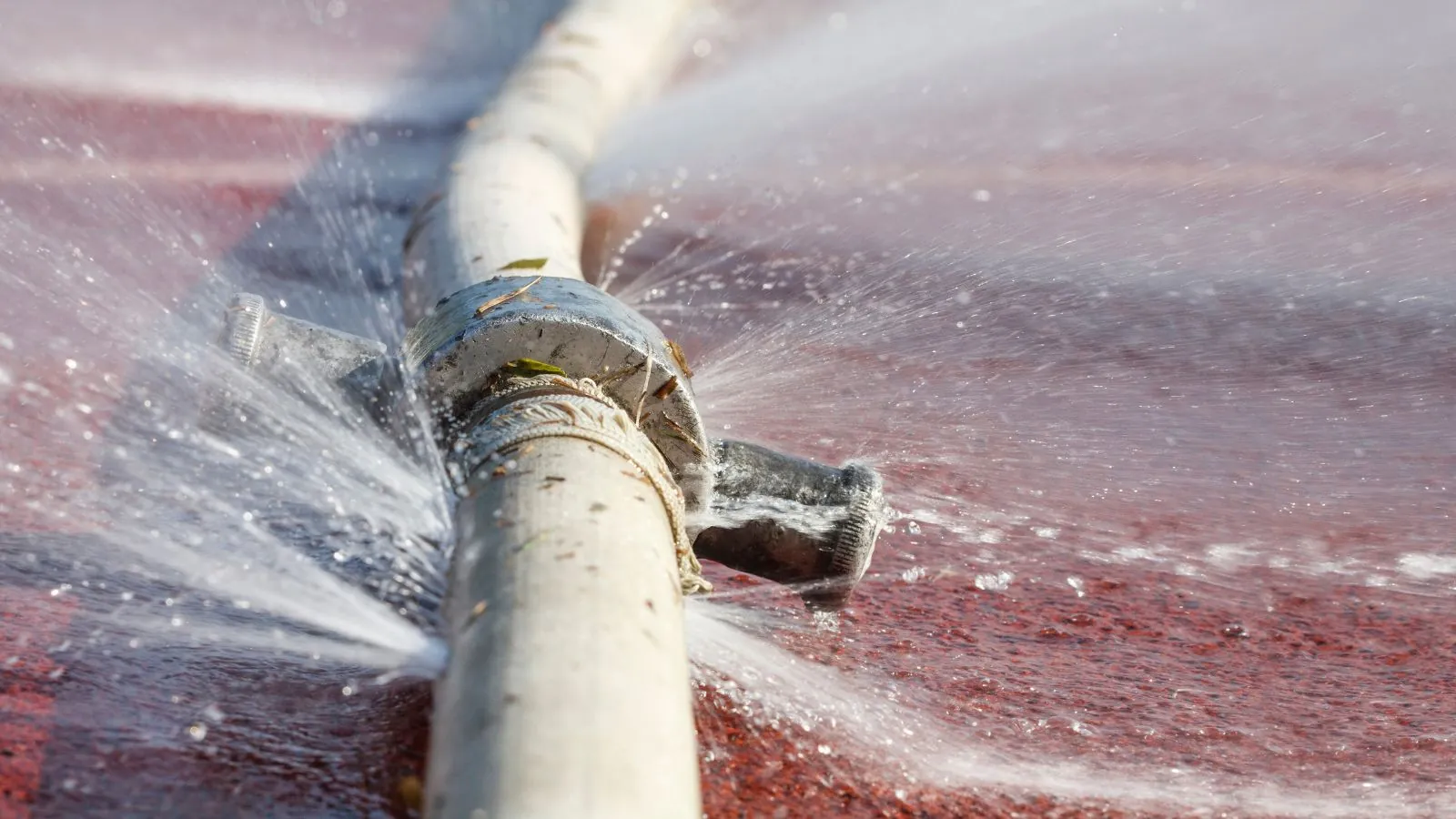
A burst pipe is a pressurized supply line failing, so water keeps arriving until someone closes a valve. If a pipe has let go in your Arlington Heights home, shut off the main water valve first, then call the 24/7 line at (833) 521-1033 for burst pipe water damage cleanup. The line is open every hour of every day, and the call can start while you are still towelling off the panel area.
Burst pipe damage differs from a slow drip because the volume is large and fast. Water follows framing, runs down through ceilings and pools in the bottom room, so the cleanup often reaches beyond where the pipe broke. Related sources have their own pages: frozen pipes, water heater failures and under-slab leaks.
Which standard applies
ANSI/IICRC S500 classes a fresh supply line break as clean water at the source, which can worsen with time. That is why a burst pipe job moves quickly from extraction to measured drying.
Burst pipe: what to do first
Locate the main shutoff, usually near the water meter where the line enters the home. The Village of Arlington Heights notes that properties have shutoff valves on both sides of the water meter, and that the owner maintains the service line from the building to the curb valve, called the buffalo box, while the Village maintains it from there to the main.
If you cannot close the valve or the break is on the street side, call the Village at 847-368-5000.
Open a faucet at the bottom level to relieve pressure, move electronics and rugs out of the water path, and keep people away from any wet outlet. Photograph the damage before anything is moved. Do not run the dishwasher or washer until the pipe is repaired.
Where burst pipe water usually ends up
The break and the damage are rarely in the same place.
Wall cavity
Water soaks insulation and the back of drywall. The surface may look fine while the cavity stays wet. See wall and drywall repair.
Ceiling below
An upstairs break shows up as a stain, bubble or sag below. Ceiling water damage repair explains the next steps.
Kitchen cabinets and sink base
A failed supply under a sink fills the cabinet and spills across the floor. Cabinet toe-kicks trap moisture. See kitchen water damage.
Bottom finished level
Water that travels downward ends up in the basement or on the first-floor subfloor, where water extraction begins.
Pipe still running?
Close the main valve, then call. Describe which floors are wet and whether the ceiling below is sagging.
How the cleanup runs
A broken pipe job moves in a fixed order, and the order protects the materials you can still save.
- 1
Stop and document
Water is confirmed off, photos and moisture readings are taken.
- 2
Extract
Standing water is pumped or wanded out.
- 3
Open and dry
Wet insulation and affected drywall are removed where readings demand it, then structural drying begins.
- 4
Verify
Readings are repeated until materials reach a normal range.
Which pipe failed matters for the cleanup
Failure type changes how much water moved and how fast.
| Failure | Typical release | Cleanup focus |
|---|---|---|
| Split supply line behind a wall | Steady until valve closed | Wall cavity, insulation, ceiling below |
| Failed fitting or joint | Spray that hits nearby surfaces | Surface drying, contents, cabinets |
| Fridge or washer supply line | Moderate, often unnoticed | Floor, subfloor, adjoining rooms, see appliance leaks |
| Pipe in an unfinished area | Large and easy to see | Extraction first, then framing and floor above |
What shapes the price after a pipe bursts
The estimate is explained before work starts. These factors move it most.
Insurance note: a sudden burst is the kind of accidental loss many homeowners policies address, but your policy decides. Report the claim promptly, keep photos and receipts, and ask your insurer what it requires before large repairs. Call (833) 521-1033 and the crew will explain scope and price first.
Burst Pipe Water Damage questions from Arlington Heights homeowners
Can I call about a burst pipe at 3 a.m. in Arlington Heights?
Yes. The line answers 24/7 including holidays. After you shut off the water, call and describe what is wet. You will be told what to do while a licensed and insured crew is dispatched.
Does the cleanup include fixing the pipe?
No. Pipe repair is plumbing. The restoration work removes water, dries the structure and scopes repairs. A plumber closes the leak, ideally that day so drying is not interrupted.
How do I know water is still inside the wall?
Moisture meters and thermal imaging read behind the surface. Soft baseboards, bubbling paint and a musty smell are common signs.
Can I wait until the plumber finishes before calling?
It is better not to wait. Extraction and drying can start as soon as the water is off, and each hour matters for drywall and subfloor.