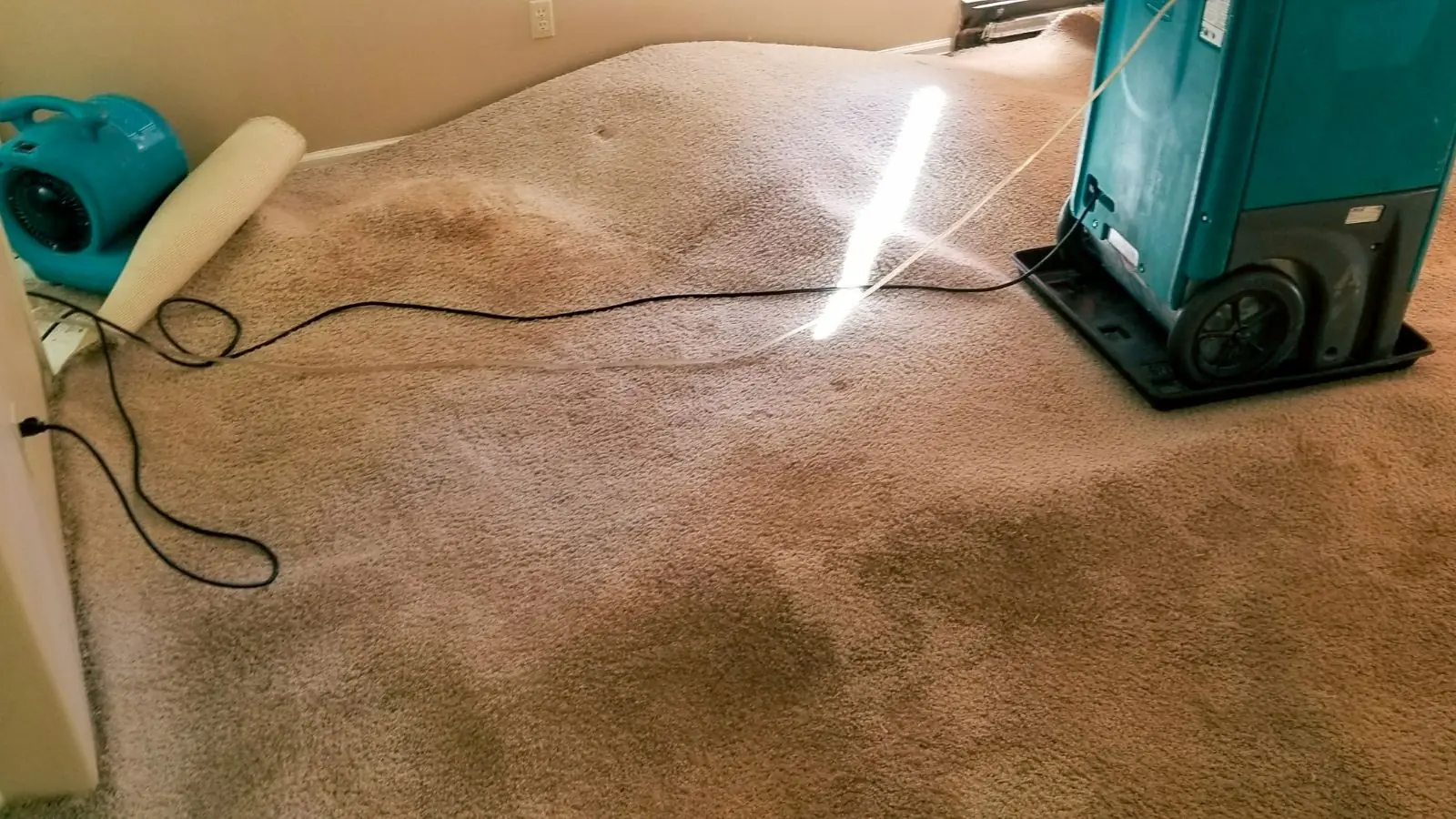
Carpet water damage means carpet and pad soaked from a leak, flood or backup. In Arlington Heights, extract standing water, keep furniture off wet carpet and call the 24/7 line at (833) 521-1033. Whether carpet can be saved depends on the water category and how long it has been wet.
Mold can follow if wet carpet stays damp. See mold remediation and the drying guidance on structural drying. Hardwood and other floors are on hardwood floor repair.
Which standard applies
ANSI/IICRC S500 guides whether carpet and pad are dried or removed based on water category and time wet.
Save or replace: how the decision is made
Carpet from clean water (Category 1) caught within a day or two can often be dried in place. Carpet from sewage or floodwater is typically discarded. Pad is often replaced because it holds water. Readings guide the call.
Carpet outcomes by water type
Category matters.
| Water | Carpet | Pad |
|---|---|---|
| Clean supply water, caught early | Often dried | Often replaced |
| Gray water | Case by case | Replaced |
| Sewage or floodwater | Discarded | Discarded |
Safe steps before the crew arrives
These steps are safe for most homeowners. Call 911 or the utility first for electrical or gas danger.
- Lift wet rugs and move furniture off wet carpet when safe.
- Do not walk on wet carpet near electrical cords or outlets.
- Do not use heaters to dry wet carpet.
- Photograph the wet area and keep samples of damaged material if your insurer asks.
Carpet soaked?
Call the 24/7 line. Mention how long it has been wet.
Carpet restoration process
A simple sequence.
- 1
Extract
Wand extraction.
- 2
Lift and dry
Carpet lifted and pad removed.
- 3
Dry subfloor
Equipment runs.
- 4
Reinstall or replace
After readings.
Mold under lifted carpet
Callers sometimes pull up carpet and find mold. That means moisture sat for days. See the mold page for next steps.
Why pad is treated differently from carpet
Carpet fibers sit on top of a foam or fiber pad that acts like a sponge. Even when carpet looks dry after extraction, the pad can hold gallons. That stored water keeps the subfloor wet and feeds odor, so pad is replaced far more often than the carpet above it.
Backing and adhesive matter too. Glue-down carpet over concrete is harder to lift without damage, while stretched carpet on tack strips comes up cleanly. The crew chooses the lift method that protects the carpet when saving it is realistic.
Odor, wicking and the second day
Callers often say the carpet felt fine on the first day and smelled musty on the second. Water wicks from pad into the carpet fibers and into the walls at the edges, so surfaces that were dry to the touch can turn damp again. That is why moisture readings at the baseboard line are repeated rather than judged by hand.
If a musty smell appears despite drying, say so. It may mean moisture remains in the subfloor or wall base. See the wall and drywall page for how the edges are handled, and the basement page if the carpet is on a lower level.
Cleaning is not the same as drying
Steam cleaning removes surface soil but adds moisture. After a water loss, drying comes first, then cleaning if the carpet is salvageable and the water was clean. For water that has touched sewage or floodwater, cleaning does not make carpet safe to keep.
Keep a small cut sample and photographs if your insurer wants to see the damage. Describe the carpet age and type when you call so the scope can be explained before work starts.
Stairs, bedrooms and area rugs
Carpeted stairs trap water in the tread nosings, and bedrooms hold water in the closet corners. Area rugs over hardwood can hide a wet floor beneath them, so lift every rug in a wet room, not only the obvious one. Wool and synthetic rugs behave differently when wet, and some are worth professional cleaning.
Tell the crew about each rug, the pad type and any prior spills. That history helps explain stains and odors that are not from the new loss.
What to photograph for the record
Take wide photos of each wet room, close photos of the water line on walls and furniture, and a picture of the carpet label or any receipt that shows its age. Keep a small cut sample if your insurer wants one. Do not discard wet pad before it has been photographed.
What shapes carpet cost
Carpet scope turns on the water type and how long the pad stayed wet, explained up front.
Insurance note: ask your insurer what applies. Keep photos before pad is lifted.
Carpet Water Damage questions from Arlington Heights homeowners
Do you offer carpet help at night in Arlington Heights?
The 24/7 line answers at all hours.
Can wet carpet be saved?
Sometimes.
How long until it dries?
Several days.