Hardwood floor water damage shows up as cupping, buckling, staining or gaps. If water reaches your floors in Arlington Heights, remove standing water, lift rugs and furniture, and call the 24/7 line at (833) 521-1033. The earlier drying begins, the more boards can be saved.
Water reaches hardwood from appliance leaks, burst pipes, rain and slab moisture. Related pages include appliance leak water damage, AC leaks and carpet water damage.
Which standard applies
ANSI/IICRC S500 recognizes hardwood as a material that needs specialty drying. Readings guide whether controlled drying can save it.
What cupping means
Cupping happens when the underside of a board absorbs more moisture than the top. Edges rise and the center dips. Callers often report cupping after a washer valve break or an HVAC condensate line leak. If caught early, boards may flatten as they dry, but sanding too soon can create ridges later.
Floor types and risks
Different floors react differently.
| Type | Water risk | Outcome |
|---|---|---|
| Solid hardwood | Cupping and buckling | Often dried and sanded |
| Engineered wood | Delamination | Often replaced |
| Laminate | Swelling at edges | Usually replaced |
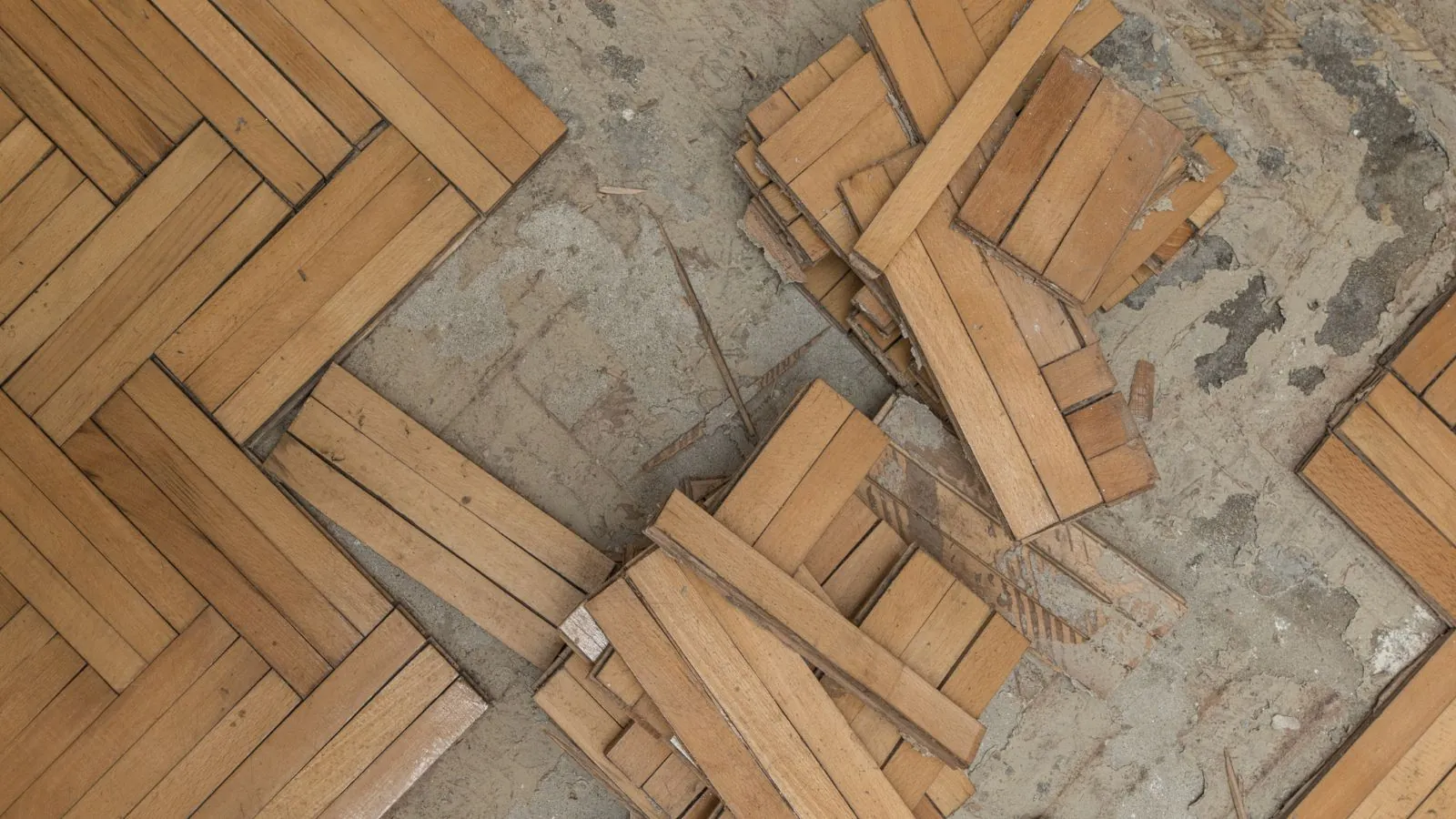
| Parquet | Lifting of tiles | Case by case |
Safe steps before the crew arrives
These steps are safe for most homeowners. Call 911 or the utility first for electrical or gas danger.
- Remove standing water and wipe the surface, but do not sand or refinish wet wood.
- Do not cover wet hardwood with plastic or rugs.
- Keep foot traffic off cupping boards.
- Photograph the floor from several angles before work begins.
Hardwood wet?
Call the 24/7 line. Mention floor type and how long it has been wet.
Hardwood drying process
Specialized drying protects the wood.
- 1
Remove water
Extraction and surface drying.
- 2
Dry subfloor
Panels or drying mats pull moisture through.
- 3
Monitor
Moisture readings guide the pace.
- 4
Decide
Sand and refinish, or replace.
Why gradual drying works
Fast heat can split boards. A controlled approach lowers moisture gradually. See structural drying for the process.
Cupping, crowning and buckling: three different problems
Cupping lifts the edges of each board. Crowning is the opposite, with the center higher than the edges, and it often shows up after a cupped floor was sanded before it finished drying. Buckling is the most serious, where boards lift off the subfloor entirely.
The cause is the same, uneven moisture, but the fix is not. Cupped floors that are dried slowly often relax. Buckled floors usually need boards removed so the subfloor can dry, and some of the wood is replaced.
Drying under the boards
Surface fans do little for a nailed hardwood floor because the water sits under it. Drying systems use small holes or floor panels to move air through the subfloor cavity, and drying mats pull moisture upward. Slower is safer, since fast drying can cause gaps and splits.
The crew takes readings at several points and compares them with a dry reference board, so you know when the floor has reached a normal moisture level before anyone sands or refinishes it.
When replacement is the honest answer
Engineered and laminate floors usually cannot be saved after long exposure because their layers separate. Solid hardwood that has been wet for weeks may be stained black by tannins and mold. A good assessment says plainly which boards are worth drying and which are not.
See kitchen water damage for wood floors near sinks and dishwashers, and appliance leaks for hidden laundry leaks that wet floors from below.
Stains, finish and what refinishing can fix
Water under a finish can turn it cloudy white, and prolonged moisture can leave dark stains in the wood itself. A cloudy finish often clears when the floor dries. Black stains usually do not sand out without removing a lot of wood.
Refinishing is cosmetic work that happens after the moisture readings are normal. Doing it earlier can seal moisture in and fail later. Ask for a written scope that separates drying from sanding and refinishing.
Stairs, thresholds and transitions
Water follows the path of least resistance, so transitions between rooms, stair landings and thresholds often show damage first. Boards at a doorway may lift while the room center looks fine. Check every transition, and tell the crew if the floor continues into another room.
If a floor has been wet more than a few days, say so. Time is the largest factor in whether boards can be dried and kept.
What shapes hardwood cost
Hardwood decisions come from moisture readings, and the scope is explained once the floor has been read.
Insurance note: sudden leaks are often covered. Ask your insurer. Keep photos of the cupping before any sanding.
Hardwood Floor Water Damage questions from Arlington Heights homeowners
Do you offer hardwood help at night in Arlington Heights?
The 24/7 line answers at all hours.
Can cupped floors be saved?
Often, if dried quickly.
Do you refinish?
Refinishing is scoped separately.