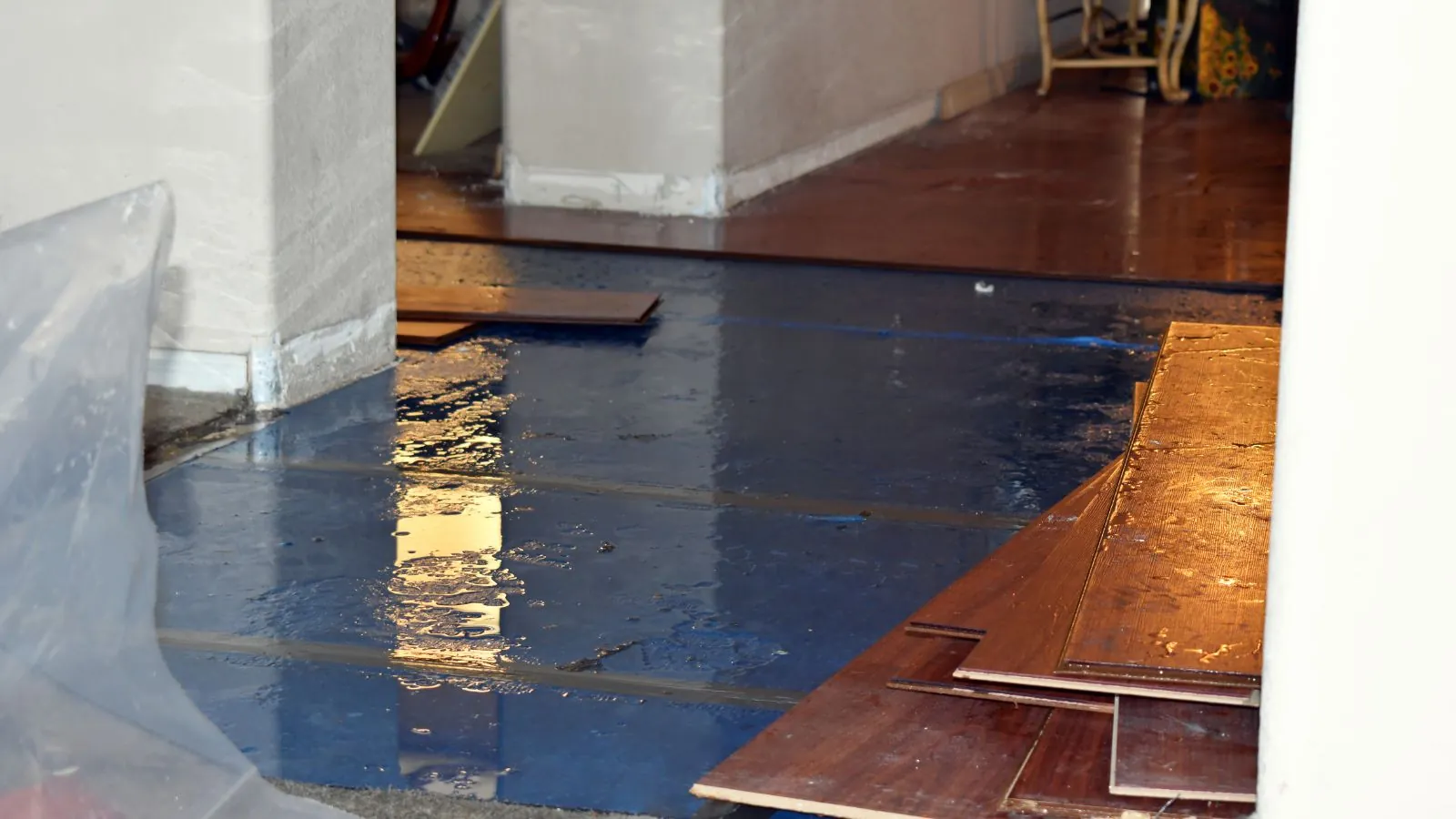
Sewage backup is an emergency because the water is grossly contaminated. If sewage is coming up a drain or toilet in your Arlington Heights home, keep people and pets out, do not use fixtures, and call the 24/7 line at (833) 521-1033. If water is near electrical equipment, call the utility or 911 first. The 24/7 line answers day and night.
Sewage cleanup is Category 3 work under the IICRC S500 standard. It involves protective gear, removal of porous materials and sanitizing. Household fans and a shop vacuum are not enough for contaminated water. Related pages include basement water damage and flood damage cleanup.
Sewage backup: what to do first
Stop using water in the house, since every flush or drain adds to the backup. Do not wade into the water without protection. Keep children and pets out. Open windows only if it is safe, and avoid touching surfaces with bare hands.
What the Village says about basement backups
The Village of Arlington Heights says basement backups occur in the Combined Sewer Tributary Area when excess storm water enters homes through sanitary service lines. The Village maintains public sewers and does routine flushing and root cutting. If the backup comes from the public main, call the Village at 847-368-5000.
The Village also runs an overhead sewer cost-sharing program. Beginning in 2018 it has paid 75 percent of qualifying costs, up to $11,250, per its stormwater page. Check current terms with the Village.
Common backup sources
The source decides who fixes it.
Main line blockage
Roots or grease block the private lateral. A plumber clears it.
Public sewer overload
Heavy rain can surcharge public sewers. Call the Village.
Floor drain backup
Water rises from basement floor drains.
Toilet overflow
Often from a blockage, not always sewage from the main.
Sewage in the house?
Stay out and call. Safety steps come before cleanup.
Why Category 3 is different
Sewage is handled with containment and disposal.
| Item | Typical handling |
|---|---|
| Carpet and pad | Removed and discarded |
| Drywall at water line | Removed |
| Hard surfaces | Cleaned and sanitized |
| Air quality | Controlled with air filtration where needed |
Sewage backup cleanup process
Safety and containment come first.
- 1
Contain
Affected area isolated.
- 2
Extract
Contaminated water removed.
- 3
Remove
Porous materials removed.
- 4
Sanitize and dry
Surfaces sanitized, then structural drying.
Why gray and black water change the plan
Under the S500 standard, water that has touched sewage is Category 3. That means pathogens may be present, so materials that soak up water, such as carpet, pad, insulation and drywall at the wet line, are normally removed rather than dried. Hard surfaces are cleaned and sanitized.
This is also why do-it-yourself drying is risky. A fan can spread contaminated droplets, and a shop vacuum can aerosolize them. If you must enter, wear waterproof boots, gloves and eye protection, and wash thoroughly afterward.
Backups in older and newer neighborhoods
The Village describes basement backups as a problem tied to the Combined Sewer Tributary Area, which means the risk varies by street. A neighbor with a dry basement does not prove yours is safe, and a neighbor's backup does not prove yours will follow. Ask the Village which sewer type serves your block.
After a backup, many homeowners ask about overhead sewers, which lift household waste to a higher pipe so it cannot back into the basement. That is plumbing work, and it is the trade the Village program targets. Restoration removes the contamination, and a plumber addresses the pathway.
What shapes sewage cleanup cost
Contaminated water changes the protective steps, and the scope explains them before work starts.
Insurance note: sewer backup coverage is usually an endorsement and may not be on your policy. Check your policy and ask your insurer. Keep photos of the drain and the affected rooms.
Sewage Backup Cleanup questions from Arlington Heights homeowners
Can I call about a sewage backup in the middle of the night?
Yes. The line answers every hour. Keep people and pets out of the water and call.
Can I clean sewage myself?
It is not recommended. Category 3 water needs protective gear and proper disposal.
Who fixes the blockage?
A plumber or the Village, depending on where it is.
Will insurance cover it?
Only if your policy has sewer backup coverage.