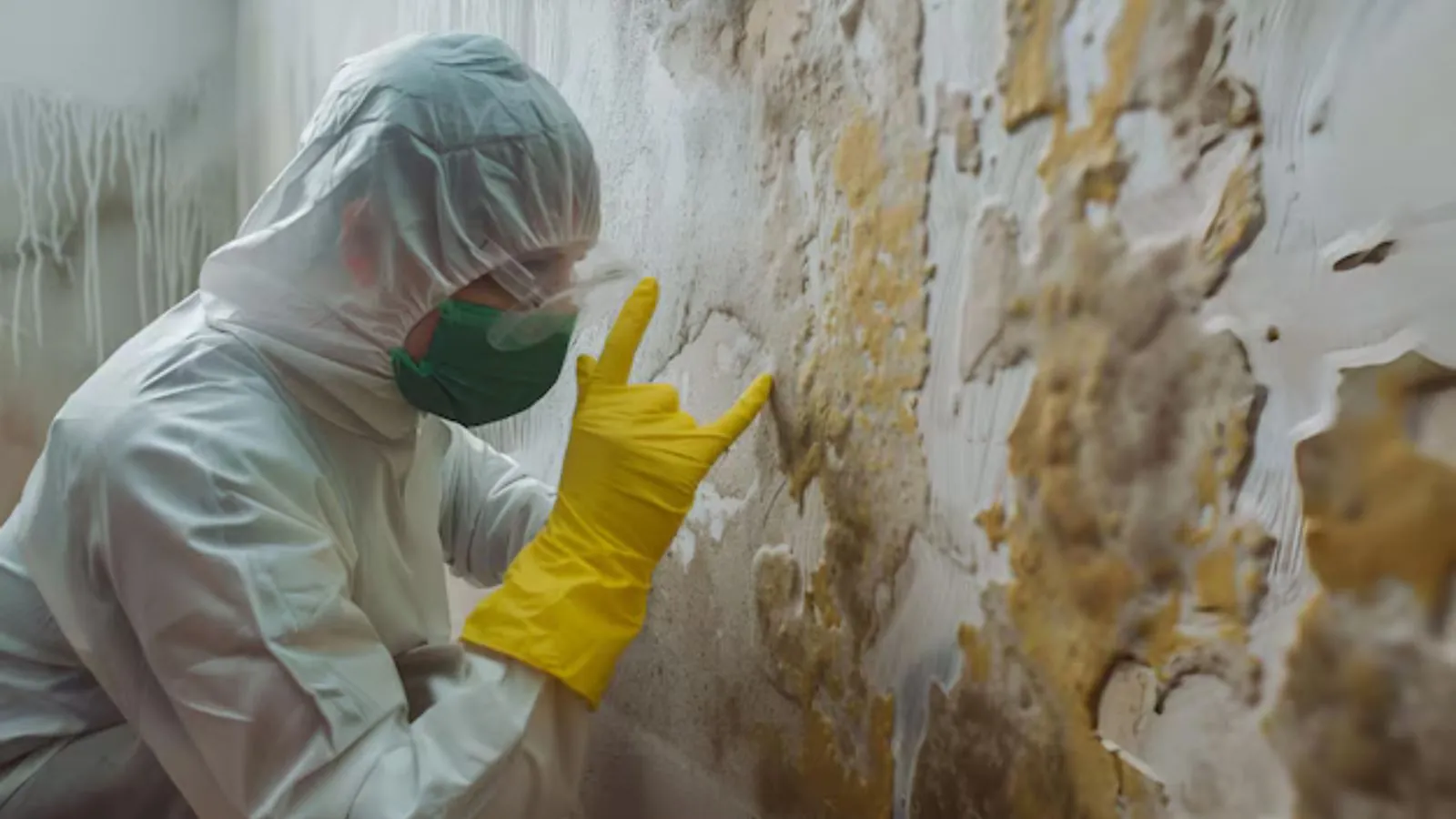
Mold remediation is the containment and removal of mold growth after moisture problems, following the ANSI/IICRC S520 standard. If you see or smell mold in your Arlington Heights home, stop the water source first and call the 24/7 line at (833) 521-1033. Mold needs moisture, so a leak must be fixed before cleanup can work.
This page is secondary to the water damage services. Mold often follows wet carpet, wet drywall or AC leaks. Health questions belong with a physician, and this page makes no health claims.
I found mold under my carpet or in a closet: now what?
Callers often find mold after pulling up carpet, opening a wall or noticing a smell in a closet near an AC unit. That means moisture lasted long enough for growth. Do not scrub it dry. Stop the source and call.
Mold remediation steps
The process follows containment principles.
- 1
Find the moisture
Moisture mapping.
- 2
Contain
Plastic barriers and negative air.
- 3
Remove
Growth and affected materials.
- 4
Dry and verify
See structural drying.
Mold found?
Call the 24/7 line. Describe where and what caused the moisture.
Testing and clearance
Some situations call for testing, such as a home sale or lender requirement. Independent clearance testing is done by a third party, not the remediation crew. No promise is made about lender acceptance. Ask whether your state licenses mold work.
Mold versus surface staining
How to think about it.
| Sign | Meaning |
|---|---|
| Fuzzy or spotted growth | Likely mold |
| Musty odor | Moisture may be present |
| Stain without texture | May be water stain |
What S520 practice looks like in your home
The ANSI/IICRC S520 standard describes how mold remediation is planned and performed. In practice, that means finding and fixing the moisture source, setting containment with plastic barriers, running negative air with HEPA filtration, removing affected porous materials, and cleaning surfaces with HEPA vacuums and damp wiping.
You can ask any company whether its crews follow S520. Do not accept a plan that skips the moisture source, because mold returns where moisture persists.
Mold and a home sale or loan
Some callers learn that a buyer's lender will not fund until mold is dealt with. In that case, ask who sets the requirement, whether an independent clearance test is needed after remediation, and what the report must show. Clearance testing is done by a third party so the result is not self-graded.
No remediation company can promise how a lender or inspector will respond. A written scope, a containment plan and a clearance report give you the paperwork the other side usually asks for.
What to do and not do while you wait
Do not disturb visible growth with dry sweeping, fans or bleach sprayed broadly. Close the room if you can, turn off air handlers that serve it, and keep moisture sources fixed. Photograph the area and note when you first saw it.
For questions about symptoms or health risks, talk with a physician. For questions about whether your state licenses mold work, ask the state agency before you hire. Related pages explain how water gets in, such as ceiling leaks and basement water.
Where mold hides after a leak
Mold likes the back of drywall, the underside of carpet pad, the inside of cabinets and the top of baseboards, anywhere moisture lingers with little airflow. Closets near an AC unit and basement stairs with a musty smell are common calls.
Because much of it is hidden, a visual check can miss it. Moisture mapping and, where warranted, inspection by an independent professional show where growth and moisture sit before any wall is opened.
What shapes mold remediation cost
Scope and price are explained before work starts.
Insurance note: mold coverage varies and may be limited. Ask your insurer. Call (833) 521-1033 for scope and price first.
Mold Remediation questions from Arlington Heights homeowners
Do you offer mold help at night in Arlington Heights?
The 24/7 line answers at all hours, though mold is rarely an emergency.
Will mold come back?
No one can promise it will not. Fixing moisture is the key.
Do you do testing?
Independent testing is separate.
Is mold dangerous?
Ask a physician about health questions.