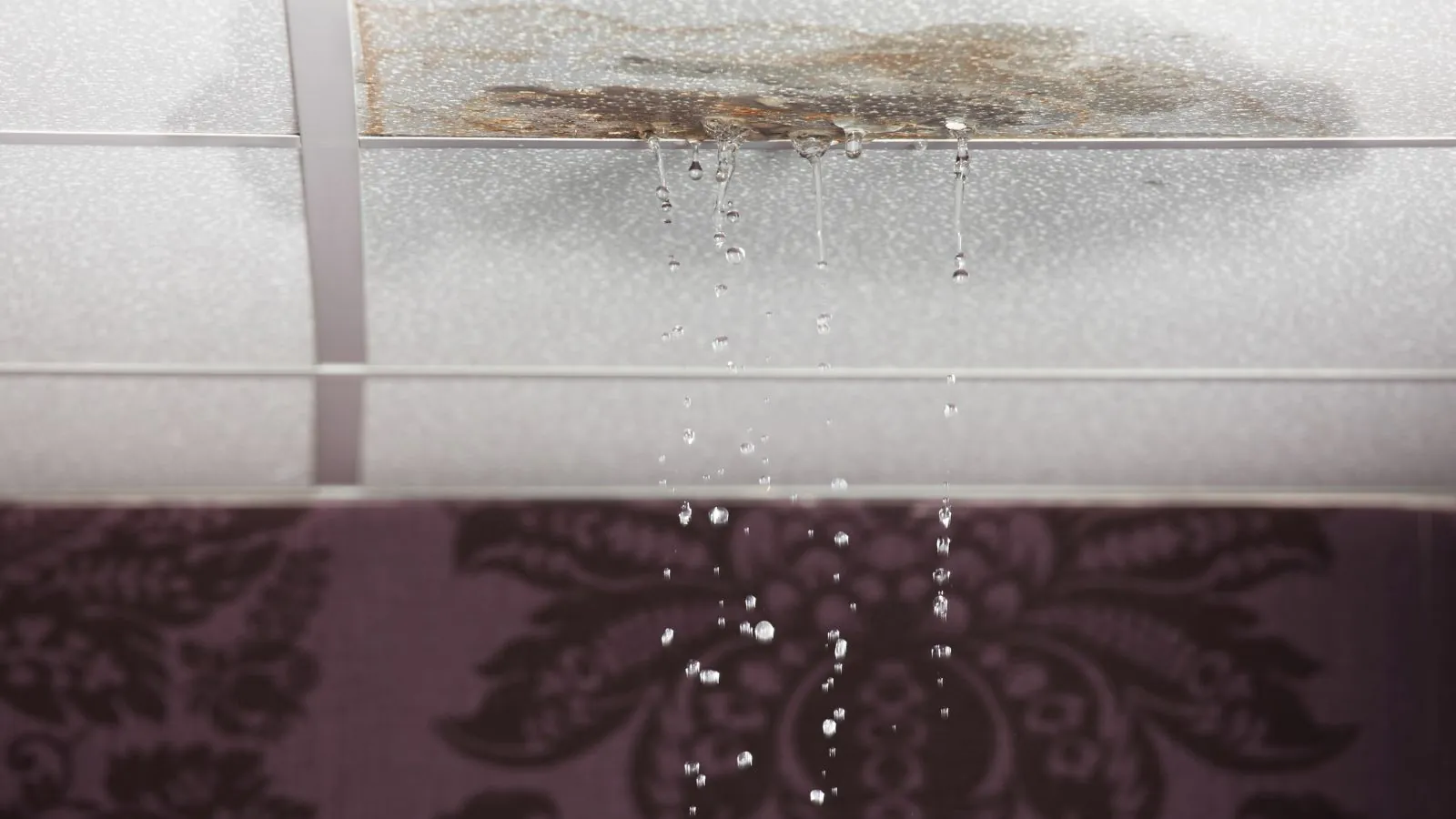
A wet ceiling is an emergency because the water above it has nowhere to go but down. If your ceiling is dripping, bulging or sagging in Arlington Heights, keep out of that room, place a bucket under the drip and call the 24/7 line at (833) 521-1033. Do not poke a bulge with your hands. A crew can be reached around the clock, including after a storm.
Ceilings fail from roof leaks, upstairs bathrooms, supply lines and HVAC condensation in the attic. This page covers the ceiling and what is above it, including roof leaks. Related pages include wall and drywall repair and AC leak water damage.
Which standard applies
ANSI/IICRC S500 expects moisture to be traced to where it travels, not only where it shows. For a ceiling that means readings above and beside the stain.
When a sagging ceiling is an emergency
A ceiling that bulges or sags is holding water. The safest step is to relieve it with a small puncture over a bucket, but only if the area is clear of wiring and you are comfortable doing so. Do not stand under a sagging section. Turn off lights on that circuit if the fixture is wet and the switch is safe to reach.
If water is near a ceiling fan or fixture, treat it as an electrical hazard and keep away until power is off at a dry panel.
Where the water comes from
Source decides the repair.
Roof leak
Rain enters through flashing or shingles, soaks insulation and stains the ceiling. A roofer fixes the roof, while the restoration work dries the structure.
Upstairs bathroom or toilet
A leak above a finished basement or first-floor ceiling is a common pattern.
Supply line
A pipe above the ceiling can release water suddenly. See burst pipe damage.
Attic HVAC
Condensation or a clogged drain line stains ceilings slowly. See AC leaks.
Safe steps before the crew arrives
These steps are safe for most homeowners. Call 911 or the utility first for electrical or gas danger.
- Stay out of rooms with a sagging ceiling, since it can release water and debris.
- Turn off lights and fixtures on wet ceilings if you can reach the switch from a dry spot.
- Place a bucket under drips and move valuables.
- Photograph the stain, then tell your insurer.
Ceiling dripping?
Call the 24/7 line. Describe stains, sagging and where the water seems to come from.
Roof leaks and ceiling damage
Roof leaks have no separate page here because the ceiling damage is the same job. Water travels along rafters, so the stain may be feet from the entry point. Wet insulation holds water against drywall, so it is usually removed.
The restoration crew will dry the structure and document the damage for your claim, but roof repair belongs to a roofer. Scheduling both quickly matters, because a repaired roof over a wet ceiling can still grow mold.
Ceiling water damage repair process
The sequence keeps the damage from spreading.
- 1
Control
Relieve trapped water safely and protect the floor.
- 2
Open
Affected drywall is cut back and wet insulation removed.
- 3
Dry
Air movers and dehumidifiers dry the cavity.
- 4
Rebuild scope
New drywall, texture and paint are scoped after readings return to normal.
Permits and who handles what
Check with the Village of Arlington Heights Building and Life Safety Department at 847-368-5560 about permit needs for ceiling or roof repairs. Permit applications are submitted electronically through the Village Civic Access Portal. The restoration crew handles water removal and drying, and any structural or roofing work is scoped separately.
Why ceiling stains return after painting
A stain that returns after repainting means moisture is still present, either from an unrepaired source or from wet insulation that never dried. Painting seals the surface and traps humidity in the drywall. The right order is to stop the source, dry the cavity, test readings, then repair and paint.
Stain blockers help only after readings are normal. Skipping the drying step is the main reason a repaired ceiling shows rings again after the next rain.
What shapes ceiling repair cost
Ceiling jobs vary with what sits above the stain, so the crew explains the scope after opening the area.
Insurance note: sudden roof or plumbing leaks are often covered, while long term seepage often is not. Photograph the stain and call your insurer promptly. Keep photos of the stain as it changes.
Ceiling Water Damage Repair questions from Arlington Heights homeowners
Can I call about a dripping ceiling after hours?
Yes. The 24/7 line answers all hours. If the ceiling is sagging, stay out of the room and call.
Should I puncture a bulging ceiling?
A small hole over a bucket can relieve pressure, but only when you are clear of wiring and the room is safe. If unsure, leave it and call.
Will the stain go away if I paint?
Paint hides it but does not dry the cavity. Wet insulation and drywall need to be dried or replaced.
Do you fix the roof?
No. A roofer repairs the roof. The restoration crew dries the ceiling and structure.