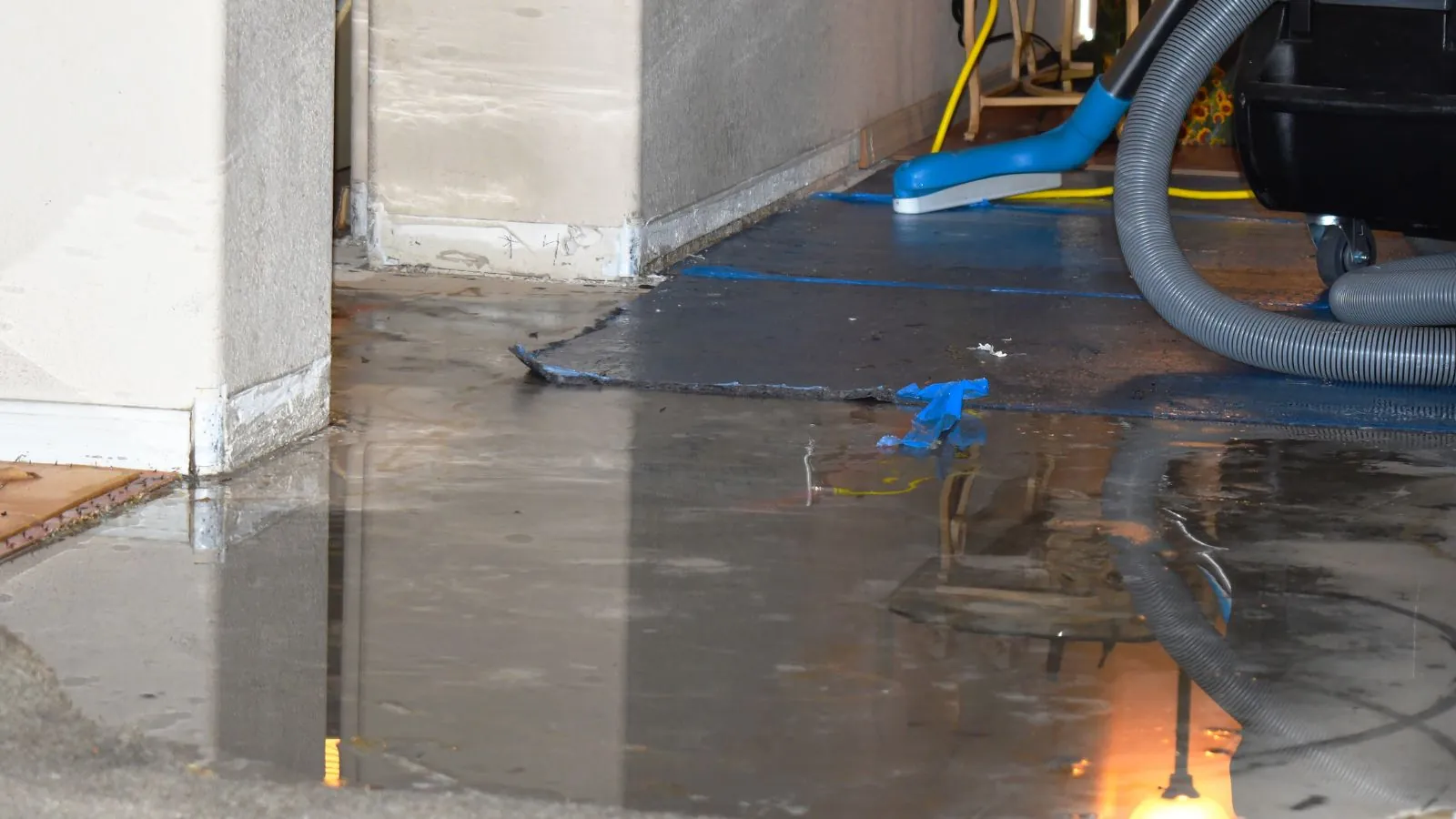
Standing water in a home is an emergency, and the 24/7 line at (833) 521-1033 answers at any hour in Arlington Heights. Water extraction is the removal of standing water with pumps and extraction units before it wicks into drywall, subfloor and framing. While you wait for a crew, stop the source if you can reach it safely, keep everyone out of water that touches outlets or cords, and lift small valuables off the floor.
This page covers water that is already on the floor. If the water is still arriving from a split line, start with burst pipe water damage. If it came up from the ground or through a wall after heavy rain, flood damage cleanup covers that side of it.
Which standard applies
The ANSI/IICRC S500 standard asks the crew to identify the water category and class first, then remove bulk water before drying. That order is why pumps come before fans.
When standing water is an emergency
Not every wet floor needs a pump, but these four situations should not wait for morning.
Water above the baseboard
Once water reaches trim and drywall it starts wicking upward. Extraction now means less material to cut out later.
Water near outlets, cords or a panel
Stay out. Cut power only if the panel is dry and reachable, and call the utility or 911 for any electrical or gas concern before calling the restoration line.
Dark, cloudy or odorous water
That points to Category 2 or 3 water. Keep skin contact to a minimum and read sewage backup cleanup before touching anything.
Water that has stood for a day or more
Time raises the odds of swollen subfloor and surface growth. Callers who waited several days usually need extraction and a full drying plan.
How water extraction works
The goal is to remove as much liquid water as possible before drying equipment is set, because every gallon pulled out is a gallon the dehumidifiers never have to handle.
- 1
Stop and read the water
The source is stopped, the water category is judged, and moisture meters mark how far it has traveled.
- 2
Pump or wand
Submersible pumps clear deep water. Extraction units with wands pull water out of carpet, pad and hard floors.
- 3
Pull what cannot dry
Soaked pad, loose baseboard and wet insulation are removed so the structure can dry.
- 4
Hand off to drying
Air movers and dehumidifiers take over. See structural drying for that stage.
Water standing in the house?
Call the 24/7 line and describe the depth, the source and what the water touches.
Match the method to the water
Depth and floor type decide the equipment. A rough guide:
| What you see | Typical method | What follows |
|---|---|---|
| A thin film on tile or vinyl | Wet vacuum and squeegee | Air movers, then moisture readings at the edges |
| Saturated carpet and pad | Truck-mounted or portable extraction wand | Pad is usually removed, carpet lifted or dried in place per readings |
| Ankle-deep water in a laundry room or basement | Submersible pump, then wand extraction | Drywall and baseboard checked at the wet line |
| Water over the baseboard through several rooms | Pumps and multiple extraction units | Flood cut where readings stay high, then full drying |
A wet vacuum from a hardware store moves a few gallons at a time. Pumps and extraction units move far more, which is the difference between a dry floor in hours and a damp subfloor in days.
Why heavy rain overwhelms a basement faster than you expect
Arlington Heights has lived this lesson. The Daily Herald reported that the July 23, 2011 storm dropped almost 7 inches of rain in just over three hours, while village sewers are designed for 2.5 to 3 inches over 24 hours. The Village of Arlington Heights says that storm flooded parts of the community and that homes in the combined sewer area can take basement backups when storm water enters sanitary service lines.
The practical point for you is speed. When water arrives that quickly, a household shop vacuum cannot keep pace, and the water that stays behind soaks the bottom materials first. If the water is rising or deeper than a few inches, plan on pumps and call early. Details on the lower level are on the basement water damage page.
What changes the price of water extraction
The estimate for pump out work is built from the factors below, and you hear the scope before equipment is placed.
General insurance note: sudden and accidental water damage is often covered, while gradual leaks and neglect often are not, and flood damage is usually excluded without separate flood coverage. The Illinois Department of Insurance advises reporting water claims promptly, taking photos and keeping damaged materials, so check your policy and ask your insurer. Want your real number? Call (833) 521-1033.
Roofs, yards and pools are different jobs
Callers sometimes ask for a pump out of a yard, a pool or a flooded driveway. That is outdoor water removal, not the interior work described here. The 24/7 line focuses on water inside homes and businesses, and a crew will say so plainly if an outdoor request is outside the scope.
Water Extraction questions from Arlington Heights homeowners
Is pump out help available overnight in Arlington Heights?
Yes. The phone line is open 24/7, including nights, weekends and holidays. Describe the depth, the source and whether water is near electrical equipment, and the call is routed to a licensed and insured crew for dispatch. No arrival time is promised on the phone, but you will be told what to do while you wait.
How deep does the water need to be before pumps are needed?
A wet vacuum can handle a thin film. Once water is more than about an inch deep, or covers carpet across a room, pumps and extraction units are the practical choice because they move far more water per minute.
Can I extract the water myself with a rented wet vac?
For a small spill, yes. For anything larger, the risk is the water you cannot see in pad, baseboard and wall cavities. A crew uses moisture meters to find it. Never use a household vacuum where water touches outlets or cords.
What happens after the water is out?
Drying begins. Air movers and dehumidifiers pull moisture from the structure, and readings are taken until materials return to a normal range. The process is covered on the structural drying page.
Will you pump out a yard or a pool?
No. This service covers water inside homes and businesses. Yard drainage and pool removal are different trades.