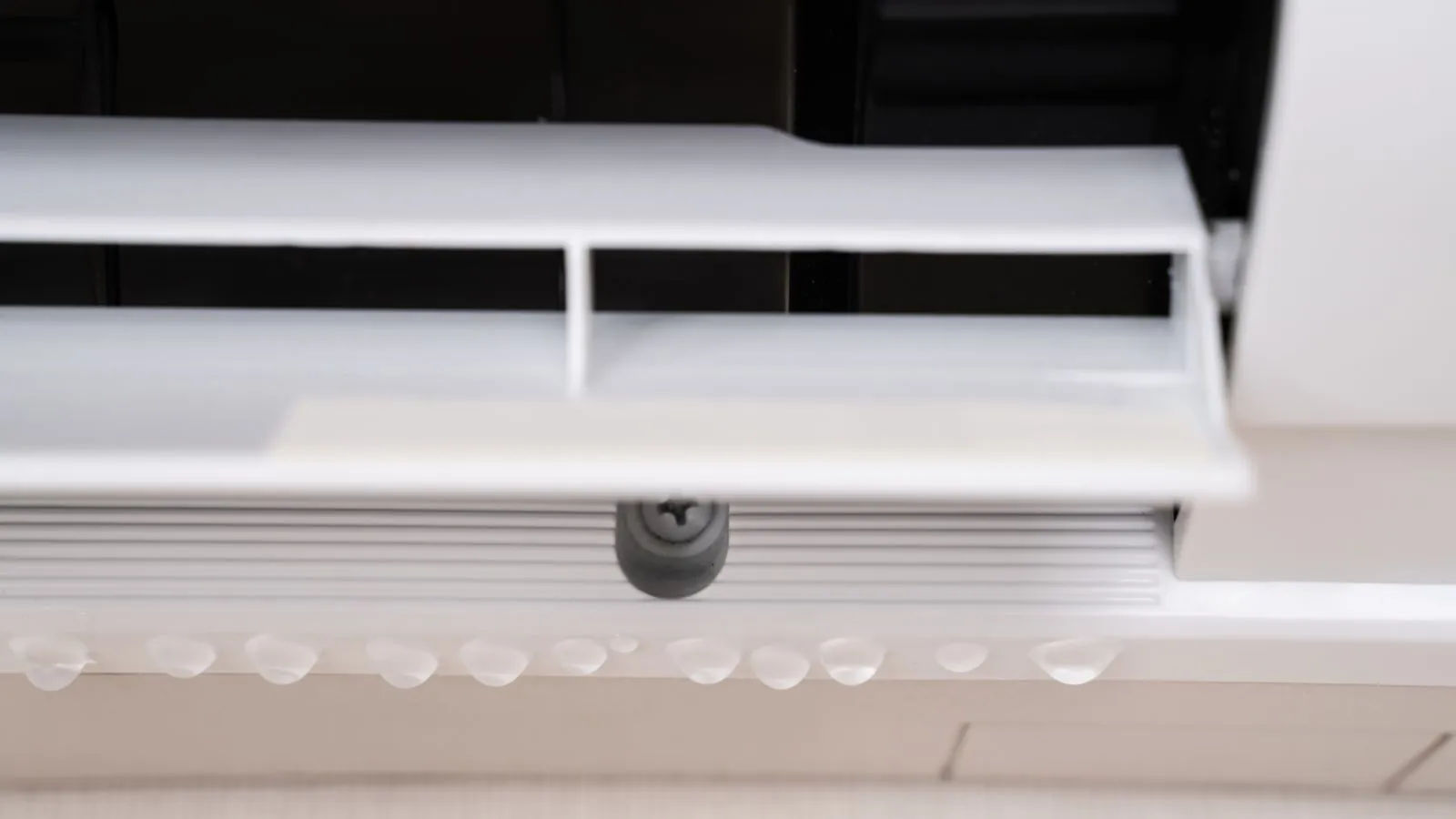
AC leak water damage usually comes from a clogged condensate drain line or a failed drain pan, and it develops slowly. If you see a stain below an air handler, a damp closet next to the unit, or water pooling near a furnace in Arlington Heights, shut the system off and call the 24/7 line at (833) 521-1033. The 24/7 line is useful because summer leaks often surface on weekends.
This is a water damage page, not HVAC repair. An HVAC technician clears the line or replaces the pan. The restoration crew dries the ceiling, wall or floor and checks for mold conditions. Related damage is covered on ceiling water damage repair and carpet water damage.
Which standard applies
ANSI/IICRC S500 notes that water can move to a higher contamination category with time. A drain pan that overflowed for weeks is read and judged, not assumed to be clean.
Where AC water ends up
The unit location decides the damage.
Attic air handler
Water stains the ceiling below, often as brown rings.
Closet unit
Carpet and pad in the closet and next room soak up condensate.
Basement or utility room
Water pools on concrete and wicks into wall bases.
Ductwork condensation
Cold ducts sweat in humid air and wet insulation.
Safe steps before the crew arrives
These steps are safe for most homeowners. Call 911 or the utility first for electrical or gas danger.
- Turn off the air handler if water is dripping from it, using the thermostat or the unit switch.
- Do not touch the unit or wiring if the floor around it is wet.
- Place a bucket under active drips and move items from beneath the ceiling.
- Photograph the drain pan, the stain and any wet insulation.
AC leaking?
Switch off the system and call. A technician stops the source while the area is dried.
First steps for an AC leak
Turn the thermostat to off so the unit stops producing condensate. Place a towel or shallow pan under the drip. If the drain line is accessible, a technician can clear it with a vacuum or flush.
Do not run the system again until the line is cleared. Running it adds condensate to a path that is already blocked.
Slow leak versus sudden release
AC leaks vary widely in speed.
| Pattern | Likely cause | Concern |
|---|---|---|
| Slow stain over weeks | Partly clogged drain line | Mold conditions in insulation and drywall |
| Sudden pour after a hot day | Fully blocked line or full pan | Ceiling saturation |
| Wet floor around unit | Cracked pan or loose fitting | Subfloor and flooring |
AC leak cleanup
Because the water is clean, many materials can be saved.
- 1
Stop the source
A technician fixes the line or pan.
- 2
Dry
Air movers and dehumidifiers dry the area.
- 3
Check for mold conditions
See mold remediation if growth is present.
- 4
Repair scope
Drywall and paint are scoped after readings.
Why condensate lines clog and why the stain shows up late
An air conditioner pulls humidity out of the air, and that water leaves through a small drain line. Algae, dust and sludge slowly narrow that line until the pan fills and spills. In an attic or closet the spill lands on insulation and drywall, and the first visible sign can be a faint brown ring on the ceiling several days after the problem began.
Because the water is condensation, it starts out clean, which is good news. Category 1 water usually allows more materials to be dried in place. The catch is time. Days of slow dripping into insulation can leave a ceiling that looks only slightly stained yet is wet inside, and that is the pattern most likely to turn musty.
Hardwood floors and closets beside the air handler
Callers often describe a closet floor that suddenly feels soft or a hardwood floor that has started to cup near a return. Cupping happens when the underside of a board absorbs more moisture than the top. Drying a cupped board gradually often lets it relax, but forcing heat on it can crack the finish, so readings guide the pace.
If a closet shares a wall with a bedroom, check the adjoining wall base for dampness as well. The crew will map the wet area with a moisture meter so only the affected drywall and flooring are opened. See hardwood floor water damage repair for how cupped boards are handled.
What shapes AC leak repair cost
Condensate losses are often small but hidden. The scope is explained once readings show how far water went.
Insurance note: gradual condensate leaks are often excluded as ongoing seepage, while a sudden drain pan failure may be covered. Check with your insurer. Keep photos of the drain pan and any stained ceiling.
AC Leak Water Damage questions from Arlington Heights homeowners
Is AC leak help available on a summer weekend?
The 24/7 line answers at all hours. AC leaks are less often an emergency than burst pipes, but a sagging ceiling still warrants a prompt call.
Do you fix the air conditioner?
No. An HVAC technician handles that. The restoration crew handles drying.
Why does my closet smell musty?
Condensate may have soaked carpet and drywall. Moisture readings confirm it.
Can I keep using the AC?
Not until the drain line is cleared.