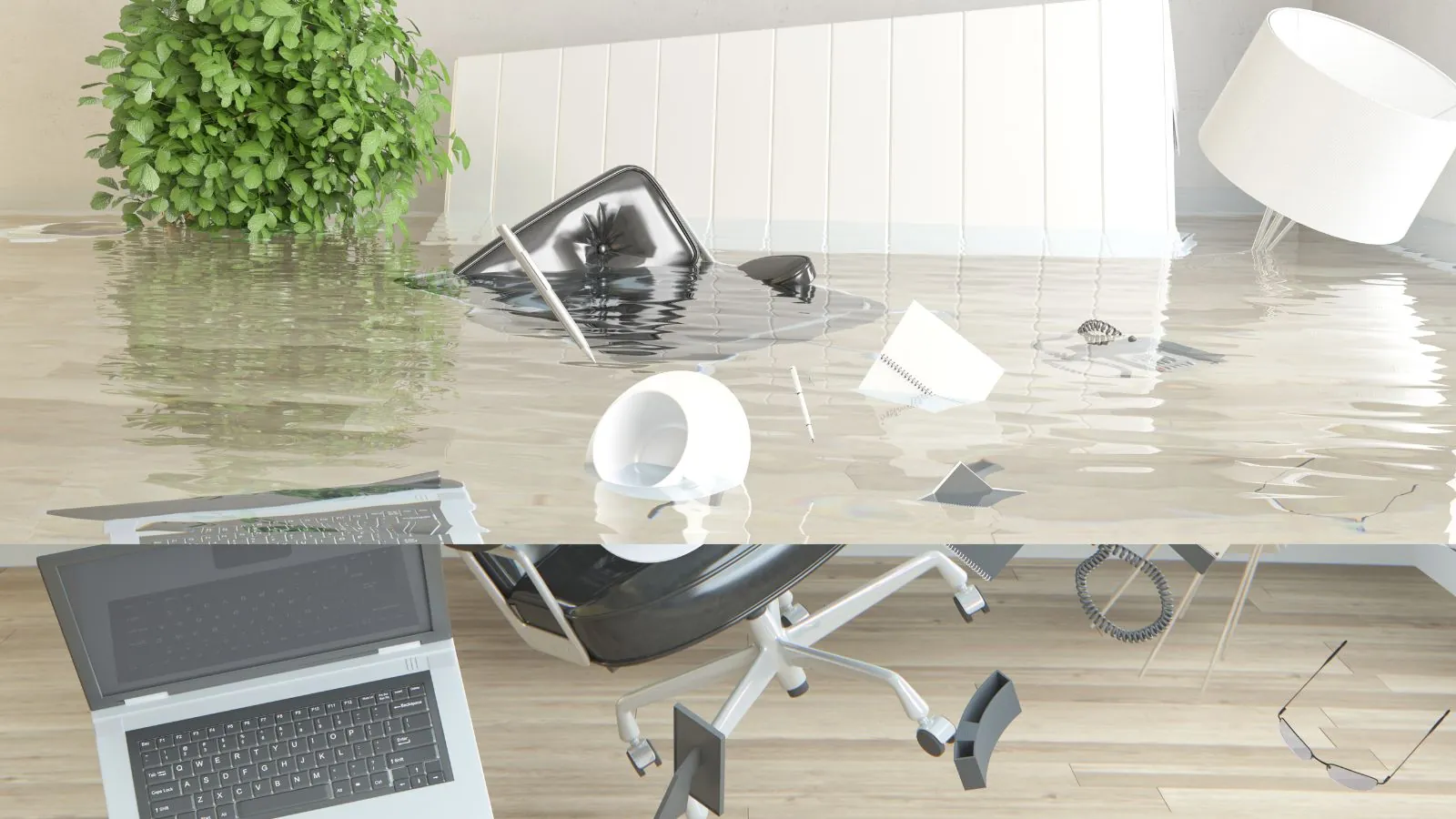
Commercial water damage is any water loss in a business, office, retail space or multi-unit building. If you manage property in Arlington Heights, call the 24/7 line at (833) 521-1033 as soon as water appears. Shut off water to the affected area, protect inventory and records, and keep staff and customers away from wet floors and electrical hazards. The line answers around the clock.
Commercial losses differ from home losses because downtime costs money, multiple tenants may be involved, and building systems add complexity. For the technical stages, see water extraction and structural drying.
Common commercial scenarios
The building type shapes the response.
Retail and restaurants
Supply line or sprinkler failures wet floors, stock and equipment.
Offices and multi-tenant buildings
A leak on one floor can reach units below. Tenant coordination matters.
Vacant or large losses
Callers report major losses in unoccupied property. Insurance documentation is key.
Healthcare and schools
Higher hygiene standards. Containment is often needed.
Safe steps before the crew arrives
These steps are safe for most homeowners. Call 911 or the utility first for electrical or gas danger.
- Move people away from wet floors and electrical equipment.
- Shut off water to the affected area if it is safe and reachable.
- Protect records and electronics that are above the water line.
- Photograph the loss and list affected stock and equipment.
Business water loss?
Call the 24/7 line. Mention square footage, floors affected and whether the building is occupied.
Permits, plans and who to contact in Arlington Heights
The Village of Arlington Heights Building and Life Safety Department (847-368-5560) handles permits. The Village states that commercial, industrial or multi-family projects require plans developed, signed and sealed by a licensed architect, and that initial permit submittals go through the Civic Access Portal. Restoration is not the same as a permitted rebuild, so ask the department what your repair scope requires.
Downtown mixed-use and Rand Road corridors
Arlington Heights has a walkable downtown anchored by a Metra station on the Union Pacific Northwest Line, and the business address of this site is on E Rand Rd. Mixed-use buildings with apartments above shops mean a leak upstairs can become a tenant issue and a retail issue at once. Document each space separately.
Commercial restoration process
Business continuity guides the order of work.
- 1
Stabilize
Water stopped, hazards controlled.
- 2
Extract and protect
Standing water removed, contents moved or covered.
- 3
Dry
Equipment sized to square footage.
- 4
Document and report
Readings, photos and scope for the owner and insurer.
Residential versus commercial differences
What changes in a business.
| Factor | Commercial |
|---|---|
| Downtime | Revenue loss drives scheduling |
| Occupancy | Tenants and customers affected |
| Systems | Sprinklers, HVAC, large drains |
| Documentation | Often needed for lease and insurer |
Protecting inventory, records and equipment
In the first hour, move or cover what loses value quickest: paper records, electronics, stock on low shelves and samples. Plastic sheeting and pallets keep items off wet floors. A crew can pack out contents when the area will be torn open for drying.
Photograph each affected unit before and after moving anything. Tenants in multi-unit buildings should keep their own record, since a leak that starts in one suite often damages the one below.
Working around a business that stays open
Many Arlington Heights businesses cannot close for several days. Phased work, containment barriers and equipment placed away from customer paths can keep part of a space open. Noise from air movers is real, so schedule the loudest work for off hours when possible.
Tell the crew your hours, your busiest times and any areas with food, medical or data equipment. Those details change containment, air filtration and the order of drying.
Documentation property managers should collect
Collect a floor plan marked with wet areas, photos with timestamps, a list of affected tenants, lease clauses about water damage and any maintenance records for the failed system. Share these with the crew and your insurer so scope, access and responsibility are clear from the start.
Notify tenants early. Noise, odor and access changes are easier to manage when everyone knows the schedule.
What shapes commercial cost
A business loss is scoped around operations as well as materials, and the plan is shared before work begins.
Insurance note: commercial policies vary widely, including business interruption terms. Ask your insurer what applies. Keep an inventory of affected stock and equipment.
Commercial Water Damage questions from Arlington Heights homeowners
Does the line help businesses after closing time?
Yes. The line answers every hour, which matters when a pipe lets go after the doors are locked.
Do you coordinate with property managers?
The crew works with owners and managers on access and documentation.
Can work be done while we stay open?
Sometimes, with containment and phased work.
Is my loss too large?
Large losses are routed to the right crew size.