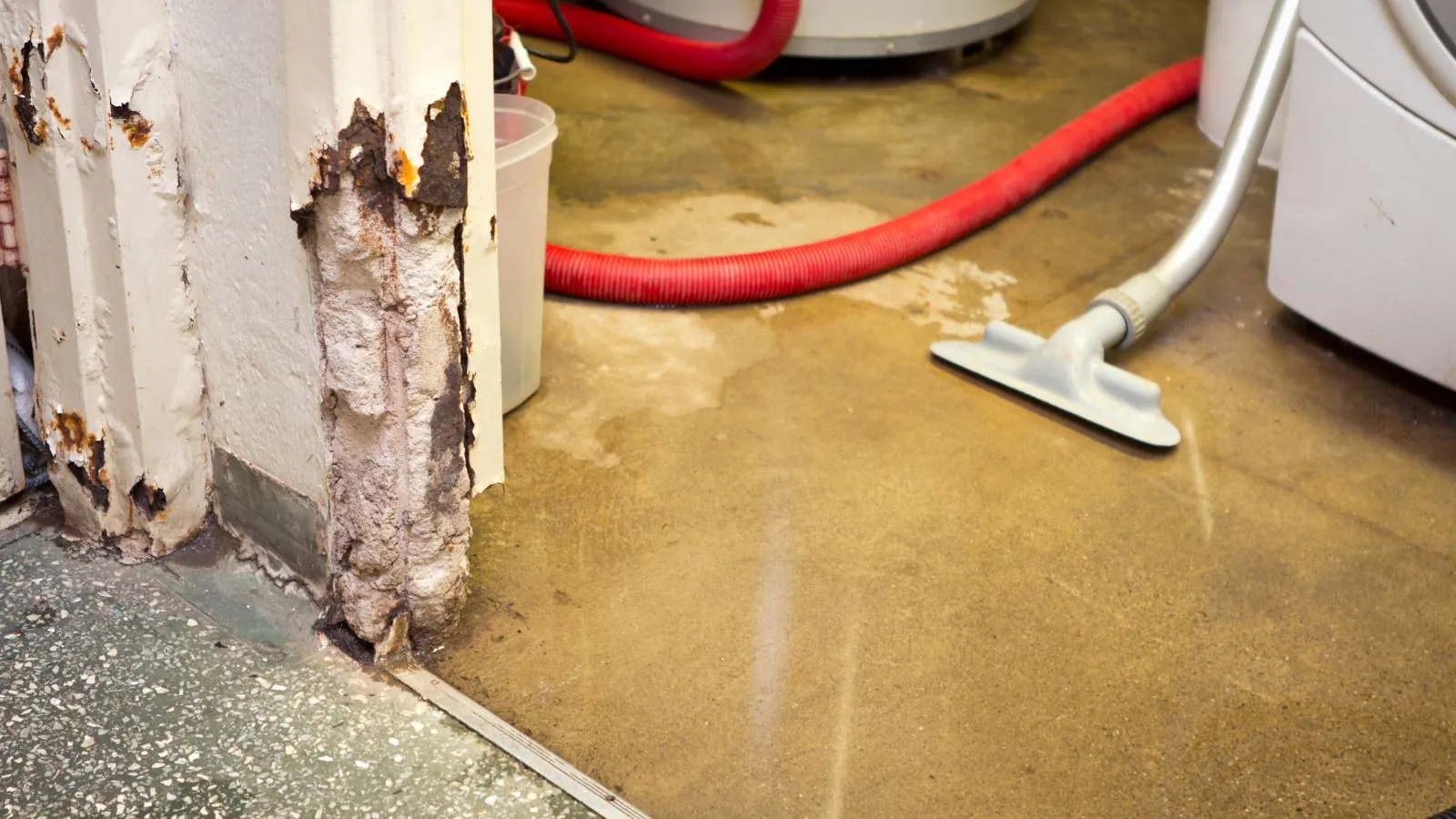
Basement water damage is water in the bottom level from rain, a failed sump pump, seepage or a backup. If your Arlington Heights basement is flooding, stay out of water near electrical equipment, stop sources you can safely stop, and call the 24/7 line at (833) 521-1033. The line is open all night during storms.
This page focuses on the below-grade room. For standing water removal see water extraction, for sewage see sewage backup cleanup, and for floodwater see flood damage cleanup.
Why basements flood in Arlington Heights
The Village states that basement backups occur in the Combined Sewer Tributary Area when storm water enters sanitary service lines. After the July 23, 2011 storm, the Village studied flood areas and prioritized 17 stormwater projects, including the Cypress Street Detention Basin expansion and relief sewers on Campbell, Sigwalt and Vail. Tie-back: ask the Village about your block and review whether your policy includes sewer backup coverage.
Basement water sources
Source determines the cleanup.
Rain and surface water
Water enters through windows, walls or floor joints.
Sump pump failure
Cleanup only. Pump replacement is plumbing.
Sanitary backup
Category 3. See sewage page.
Plumbing leaks
Burst pipes and water heaters.
Safe steps before the crew arrives
These steps are safe for most homeowners. Call 911 or the utility first for electrical or gas danger.
- Stay out of a basement with water near the electrical panel or outlets.
- Do not run a household vacuum on water.
- Treat water from a drain as contaminated and keep children and pets away.
- Photograph the water line before anything is moved.
Basement flooded?
Call the 24/7 line. Mention depth, finished or unfinished space and sources.
Basement cleanup process
Safety, extraction, drying.
- 1
Assess
Electrical hazards and water category checked.
- 2
Extract
Pumps clear water.
- 3
Remove
Wet carpet, drywall and contents.
- 4
Dry
Equipment runs. See structural drying.
Restoration is not waterproofing
Callers sometimes ask about foundation inspection and waterproofing. Those are different trades. Restoration cleans and dries after water enters. If water keeps coming in, talk with a waterproofing or drainage specialist.
Finished versus unfinished basements
Contents change the job.
| Type | Cleanup focus |
|---|---|
| Unfinished | Extraction, drying walls and floor |
| Finished with carpet | Pad and carpet removal, drywall |
| Finished with hardwood | See hardwood repair |
Finished basement contents: what to move first
In a finished basement the order of rescue matters. Move electronics, documents and photographs first, then upholstered furniture, then anything wooden. Items that sit in even an inch of water wick moisture upward through legs and bases, so lifting them onto plastic or blocks buys time.
Do not carry heavy wet boxes through water on a staircase. Cardboard fails when saturated, and a dropped box can injure you. If the water is deeper than the first step, leave the contents and call for extraction before anyone goes down.
What happens to walls, carpet and the stairs
Drywall in a basement often touches a concrete floor, so water enters at the bottom edge and wicks upward. A crew cuts the wall a few inches above the highest wet reading, a step called a flood cut, so the cavity can dry. Carpet is lifted from the tack strip, and the pad is discarded when it has been soaked.
Stair stringers and framing are wood, so they are measured with a moisture meter instead of replaced by default. The aim is to keep structure that can dry and remove only what cannot, with readings recorded each visit.
Questions worth asking your Village about drainage
The Village reports that its Combined Sewer Tributary Area is designed for roughly a 10 to 25 year service level, and that problem areas currently protect against about 1.8 inches of rain in one hour, give or take 0.3 inches. Separately sewered areas are designed around a 100-year storm using detention basins.
Those figures come from the Village stormwater page and describe public infrastructure, not your private lateral. If your basement has taken water more than once, ask Public Works at 847-368-5000 whether your block is in a combined or separate sewer area and what the overhead sewer program currently covers.
What shapes basement cleanup cost
Basement jobs depend on depth, finish level and water source, and you hear the plan first.
Insurance note: the Illinois Department of Insurance says standard homeowners policies exclude flood, while sewer or sump backup may be covered if you have that coverage. Keep photos of the water line on the walls.
Basement Water Damage questions from Arlington Heights homeowners
Will anyone answer when the basement floods at night?
Yes. The line answers every hour. If water is rising, stay out of the basement and call.
Will you replace my sump pump?
No. A plumber does that.
Is it waterproofing?
No. Restoration is not waterproofing.
How soon should I call?
As soon as it is safe.