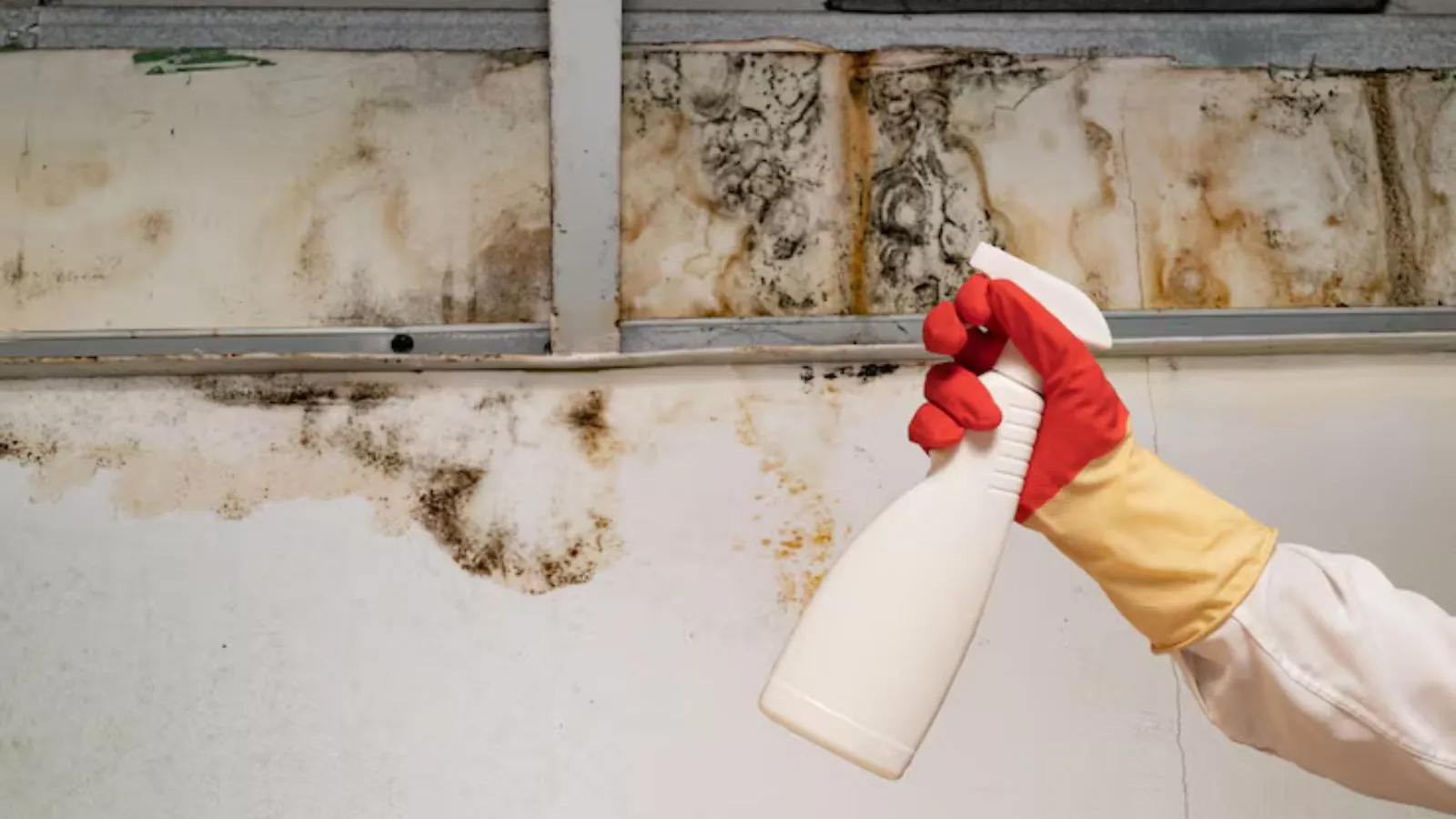
People use the words mold and mildew interchangeably, and in everyday conversation that is fine. Mildew is a type of mold that tends to stay on the surface, often in bathrooms and on damp fabric. Other molds can penetrate porous materials such as drywall and wood. The practical difference is how deep the problem goes and how it should be handled.
This guide helps you decide what you are looking at. It makes no health claims, and anyone with symptoms should see a physician. For anything beyond a small patch, see mold remediation.
Quick comparison
Appearance can overlap, so use texture and location too.
| Feature | Mildew | Mold |
|---|---|---|
| Typical look | Flat, powdery, gray or white, can turn brown | Fuzzy or slimy, green, black, blue or white |
| Typical place | Shower walls, window sills, damp fabric | Wet drywall, wood, carpet pad, insulation |
| Depth | Mostly on the surface | Can grow into the material |
| Cleaning | Usually wipes off hard surfaces | Porous materials often removed |
| Smell | Musty | Musty, sometimes stronger |
Where each shows up
Mildew likes damp, warm spots with poor airflow, such as a shower corner or the underside of a bathroom fan that does not vent well. Other molds show up on drywall after a leak, on basement walls after seepage and behind furniture pushed against a cold exterior wall.
Location gives a clue about the cause. A shower corner points to ventilation. A basement wall that is damp after rain points to drainage. A ceiling spot below a bathroom points to a plumbing leak.
What a homeowner can clean
A small patch on a hard, sealed surface, such as tile or a painted wall, can usually be cleaned with detergent and water, followed by thorough drying. Wear gloves and eye protection, and use a respirator fitted for the task. Do not mix cleaning products.
If the growth returns in a few days, the moisture source is still active. If the material is soft, stained through or crumbling, plan to replace it. Painting over growth hides it and traps moisture.
When to treat it as more than mildew
Treat it as a bigger problem when the area is larger than a few square feet, when it is on drywall, ceiling tile, carpet or insulation, when it follows a leak or flood, or when it keeps coming back. In those cases, the S520 approach of containment, removal and drying is the safe one.
See water damage and mold for the moisture link, and removing mold from basement walls for a specific case.
Fix the moisture, not just the stain
Run bath fans during and after showers, vent them outdoors and keep indoor humidity in a moderate range. A hygrometer costs little and tells you the number. Fix leaks quickly and keep air moving behind furniture on cold exterior walls.
If a room stays damp, a moisture meter reading can tell you whether the walls are wet inside, which is the first step in finding the source.
Why the name matters less than the cause
Whatever you call it, growth on a surface means moisture has been present long enough to support it. That is the question to answer. If the moisture source is a shower used daily, ventilation is the fix. If it is a leak, plumbing and drying are the fix.
Labels can mislead homeowners into thinking a small patch is harmless or a large one is hopeless. Size, material and cause are better guides than a name.
A short safety note
Cleaning can stir up particles. Wear gloves, eye protection and a respirator rated for the task, keep the area ventilated and keep children and pets away. Do not mix cleaning products, and stop if you feel unwell.
If anyone in the home has health concerns related to indoor air, speak with a physician and consider a professional assessment.
Common household spots to check
Look behind the toilet, under the sink, around the bathtub caulk, along window sills, at the corners of exterior walls and inside closets against outside walls. Check the dryer vent, the bathroom fan and the area around the water heater.
A flashlight held at a low angle shows texture on a wall surface that is hard to see in normal light.
Local note: Chicago-area humidity and winters
Northern Illinois has humid summers and cold winters. Warm, humid summer air meeting cool basement walls can produce condensation, and tightly sealed winter homes can trap shower moisture. Both patterns are mechanisms, not local statistics, so check your own humidity with a simple hygrometer.
If water entered your basement after a storm, see basement water damage cleanup. Questions about local storm drainage go to Village Public Works at 847-368-5000 for Arlington Heights, or to the city office in Rolling Meadows or Prospect Heights.
Source types: ANSI/IICRC S520 standard, U.S. public health guidance on mold, Village of Arlington Heights Public Works
Questions homeowners ask
Is mildew the same as mold?
Mildew is a kind of mold that usually stays on the surface. Other molds can grow into porous materials.
Can I tell mold type by color?
No. Color does not identify a type, and laboratory analysis is the only way to identify one.
Is vinegar or bleach better?
Detergent and water on hard surfaces is a common first step. Do not mix products, and ask a professional if the area is large.
How do I keep bathroom mildew away?
Vent the fan outdoors, run it after showers, wipe wet surfaces and fix leaks quickly.