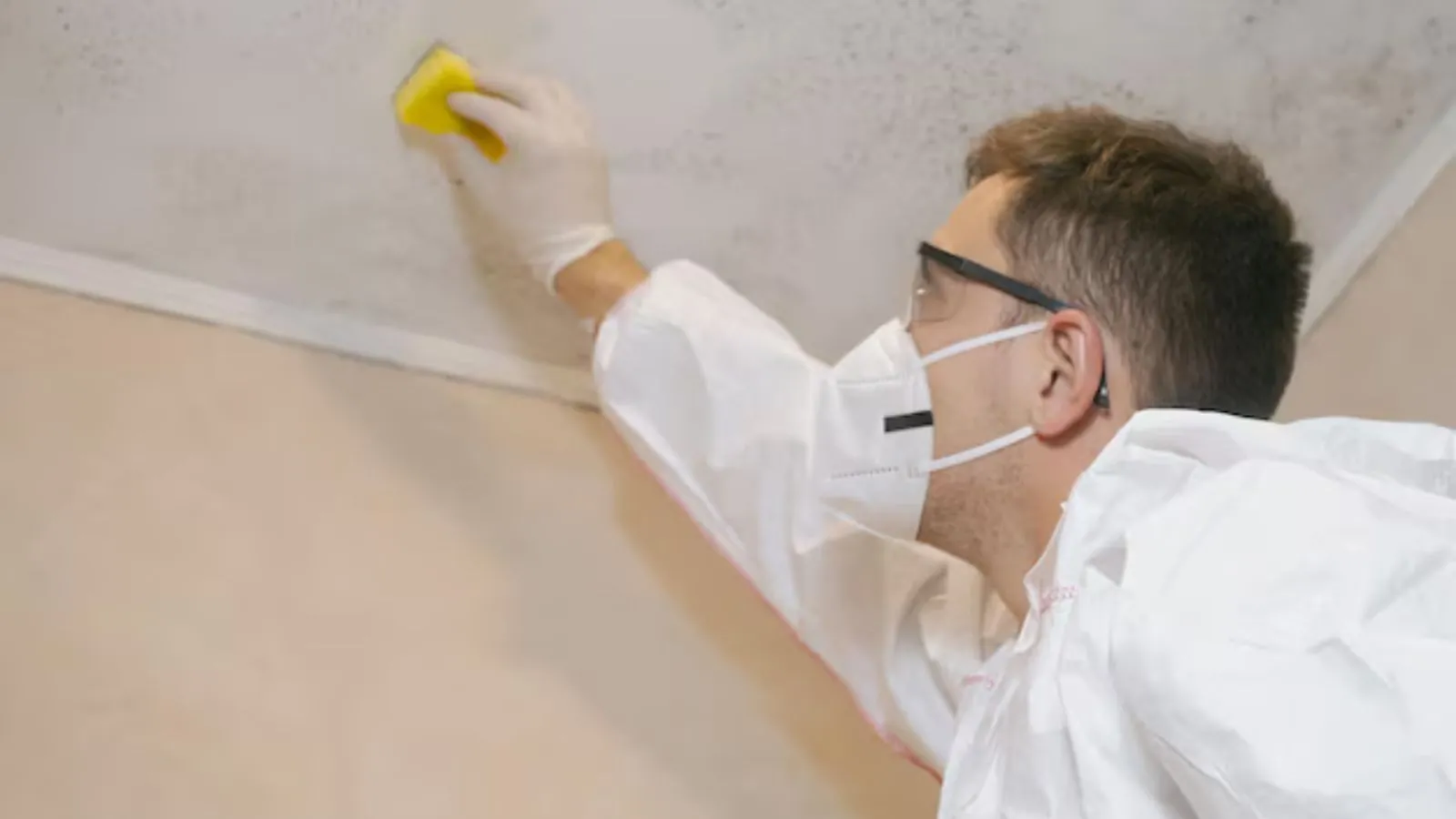
Clearance testing, sometimes called post-remediation verification, is a check performed after mold removal to see whether the work area meets the criteria set in the scope. It comes up when a home is being sold, when a lender wants documentation and when a dispute needs a neutral record.
This guide explains the process in plain terms. It makes no health claims and does not tell you which test your transaction needs, because that depends on the contract, the lender and your insurer. Ask each of them what they require.
What clearance testing is
After remediation, an independent assessor inspects the area visually and may take air or surface samples. A lab compares results with a baseline, such as outdoor air or an unaffected room. The goal is to confirm that the area is clean, dry and clear of visible growth, and that spore levels are not elevated compared with the baseline.
The ANSI/IICRC S520 standard describes the remediation process, including verification. It does not set a universal pass or fail number, so the criteria are written into the remediation plan before work starts.
Who does what
Keeping roles separate protects everyone.
| Role | Task |
|---|---|
| Independent assessor | Writes the protocol, inspects, samples and judges clearance |
| Remediation contractor | Performs containment, removal and cleaning to the protocol |
| Lab | Analyzes samples and reports results |
| Buyer, lender or insurer | Defines the documentation they accept |
Why independence matters
A contractor who removes mold and then tests its own work has a conflict of interest. Many buyers and lenders prefer that the assessor and the contractor be different companies. If you are the seller, ask the buyer what they will accept before you order a test.
Some people order testing before remediation to find out what is there. That is also a separate step. Whether it is needed depends on the situation, and visible growth is often addressed without sampling.
Timing for a sale
Plan time for the work. Remediation, drying, testing and lab turnaround can add days to a closing schedule. Start early and give your agent the documents as they arrive: the scope, the contractor invoice, photos, moisture readings and the clearance report.
If the cause was a leak or flood, keep the repair records as well. See water damage and mold for how moisture and growth connect, and mold remediation for the containment process.
Questions to ask first
Ask the buyer or lender whether they require testing at all. Ask whether they require an assessor with specific credentials. Ask what the pass criteria are, and who receives the report. Written answers prevent a failed closing.
Ask your insurer whether any mold coverage applies, because many policies limit it. See mold coverage under homeowners insurance for the pattern.
What a clearance report usually contains
A typical report lists the area inspected, the visual findings, moisture readings, sampling locations, lab results and a conclusion on whether the area meets the protocol. It names the assessor and the date. The sale file should hold this report along with the remediation scope and the contractor invoice.
Ask the assessor to explain the findings in plain terms. If the area does not pass, the report should say why and what must be done before retesting.
When testing is not the answer
Testing cannot fix a moisture problem, and it does not replace removal. If you can see growth, the usual response is to correct the cause and remove it under proper containment. Testing before remediation is sometimes used to learn what is present, but it is a separate decision.
If a buyer is nervous, a clear record of the water event, the repair and the final readings often settles more questions than a single sample does.
Costs and planning without surprises
Ask each party for a written quote and what is included: inspection, number of samples, lab fees and the report. Ask about retesting if the area does not pass. Planning for a possible second round avoids a rushed closing.
Keep every document in one folder and share it with your agent, lender and buyer as it arrives.
If the area does not pass
A failed result usually means more cleaning, more drying or a missed moisture source. The assessor can explain which part of the protocol was not met. The contractor corrects it, then the assessor re-inspects and may retest.
Build this possibility into your timeline, and tell your agent early so a closing date does not slip without warning.
Local note: Arlington Heights disclosure
Illinois requires sellers of residential property to complete a disclosure report about known conditions, including flooding or recurring leakage problems in the crawl space or basement. Ask your real estate attorney or agent how that form applies to a past water loss and a remediation. Municipal permit questions go to the Village Building and Life Safety Department at 847-368-5560.
Properties in Rolling Meadows and Prospect Heights fall under their own city permit offices.
Source types: Illinois Residential Real Property Disclosure Act, Village of Arlington Heights Building and Life Safety page, ANSI/IICRC S520 standard
Questions homeowners ask
Do I need mold testing to sell my house?
Not as a general rule. A buyer, lender or contract may ask for it, so ask what is required in your transaction.
Who should do the clearance test?
An independent assessor, not the remediation contractor, is the usual preference.
Is there a universal pass number?
No. The S520 describes the process, and the criteria are set in the protocol for each job.
How long does clearance testing take?
Inspection is quick, while lab results can take several days. Ask the assessor for a schedule.