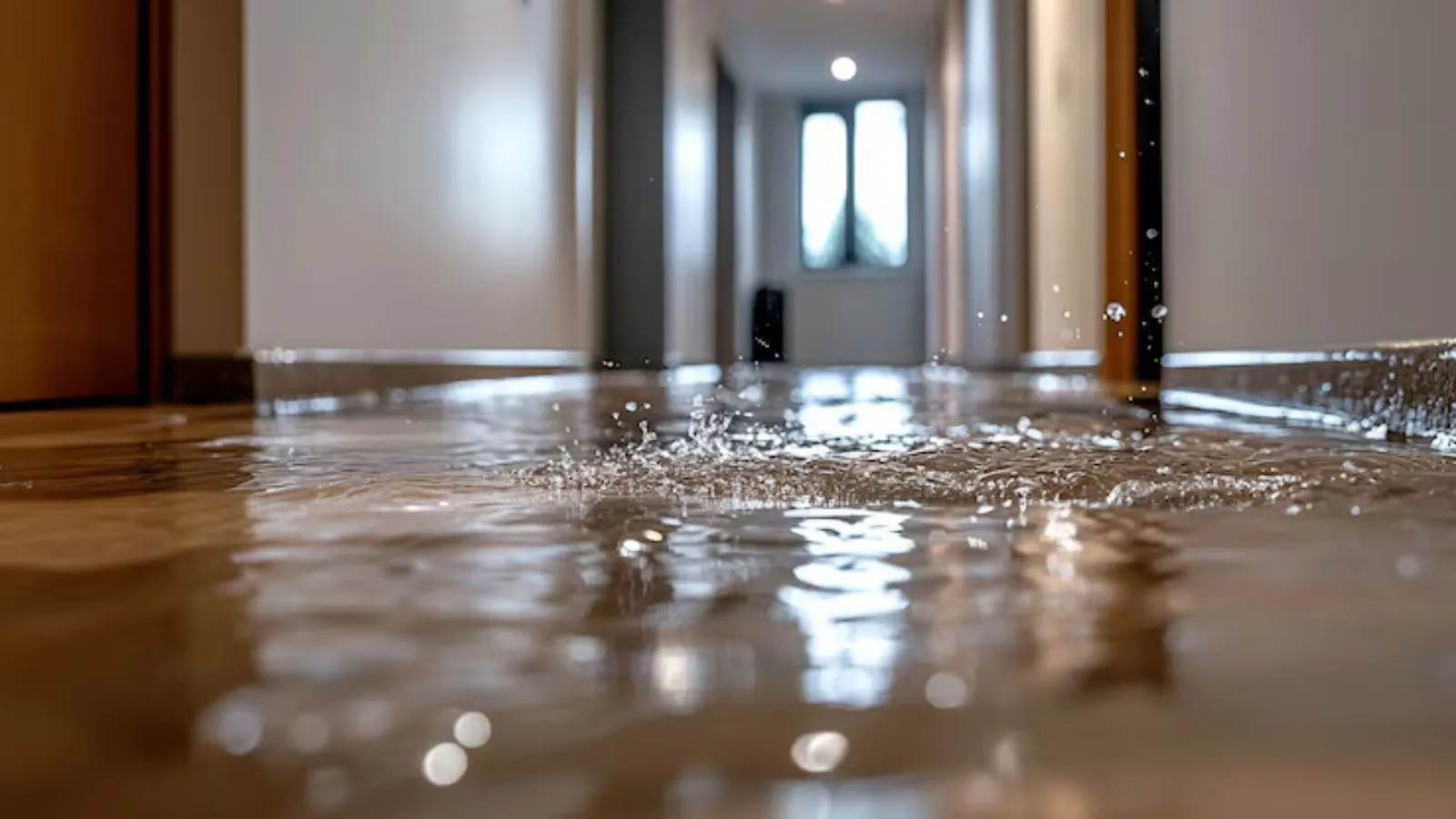
Not every wet spot needs a crew. A small spill from a clean source, caught quickly, can often be dried by the homeowner with towels, fans and a dehumidifier. Larger losses, contaminated water and hidden moisture are different, and drying them wrong can lead to warped floors and mold.
This guide helps you decide. It makes no health claims, and it does not replace judgment about safety. If you are unsure, call the 24/7 line at (833) 521-1033 and describe what you see.
Home job or professional job?
Use the first column that matches your situation.
| Situation | Usually a home job? | Why |
|---|---|---|
| Small clean spill on a hard floor, wiped within hours | Yes | Little absorption |
| Small clean leak on carpet, caught quickly | Maybe | Pad may hold water |
| Water in drywall, ceiling or under flooring | No | Hidden moisture needs readings |
| Water from a washer, dishwasher or toilet | No | Possible contamination |
| Sewage or floodwater | No | Category 3, protective gear needed |
| Any water that sat for more than a day | No | Mold risk rises, category may change |
What you can safely do first
Stop the source. Turn off power to wet areas if you can do so safely. Mop or blot up standing water, move furniture and lift rugs. Open windows when weather and security allow, and run fans and a dehumidifier. Photograph the area for insurance before you move things.
Do not use a household vacuum on water. Do not use heaters on wet carpet. Do not walk through water near electrical outlets or appliances.
Why hidden moisture is the catch
The visible wet spot is often smaller than the wet area. Water moves under baseboards, behind walls and into subfloors. A floor can feel dry on top while the pad and subfloor stay wet. Without a moisture meter, you are guessing.
This is why measured drying, described under structural drying, uses readings at the start, during and at the end. Drying is finished when the numbers say so, not when the surface feels dry.
A simple check after two days
After a small spill, check again in a day or two. Press on carpet, smell for mustiness and look at baseboards for staining. A rented or owned moisture meter helps. If readings remain high, if the smell appears or if paint bubbles, the problem is bigger than it looked.
At that point, call. Waiting longer only raises the risk of removal. See water damage and mold for why timing matters.
Safety limits
Never handle sewage or floodwater without professional protective gear. Never touch electrical equipment while standing in water. Be careful with ladders and wet floors. If anyone in the home is unwell, a physician is the right contact.
See water extraction for what a crew does when the water is larger than a spill.
What equipment a pro brings
Professional crews use extraction units that remove far more water than a mop or wet vacuum, air movers placed to direct airflow across surfaces and dehumidifiers that pull moisture out of the air. They also use moisture meters, thermal cameras and hygrometers to guide placement and measure progress.
That equipment is not magic. It is a way to dry deeper materials in a controlled way, and readings show when the job is finished.
A cost-sense approach
Calling a professional for a small spill may not be necessary. Calling after several days of wet materials often means a bigger job. A phone call describing the situation costs nothing to make, and a technician can tell you whether it is a home job.
If you decide to dry it yourself, check again in two days with a meter or at least by touch and smell, and call if anything seems off.
Common mistakes with home drying
Typical mistakes include relying on one fan, closing the room, covering wet areas with plastic, using heat on wet carpet and declaring the job done when the surface feels dry. Each one can leave moisture trapped in materials.
Measured drying with a meter and dehumidifier avoids those mistakes by showing what is still wet.
Kids, pets and the household
Keep children and pets away from wet areas, cleaning products and running equipment. Keep cords out of water and off the floor. Check that smoke detectors work if equipment is running in the house.
If anyone is elderly, pregnant or has respiratory concerns, speak with a physician about whether to stay in the home during larger cleanup jobs.
Local note: when Arlington Heights storms are involved
The Village of Arlington Heights explains that basement backups happen in its Combined Sewer Tributary Area when excess storm water enters sanitary service lines. Water that comes up a drain should be treated as contaminated and left to professionals. A seep from a window well after rain is a different case, but it can still hide moisture behind finished walls.
For questions about your street, call Public Works at 847-368-5000. Homeowners in Rolling Meadows or Prospect Heights contact their own city.
Source types: Village of Arlington Heights stormwater page, ANSI/IICRC S500 standard
Questions homeowners ask
Can I dry a wet carpet myself?
A small, clean spill caught quickly may be manageable, but pad often holds water. If it is wet after a day, call for readings.
Are household fans enough?
Fans help surface drying, but hidden moisture needs measured drying and dehumidification.
How do I know when it is dry?
A moisture meter shows when materials return to a normal range. Surface feel is not enough.
Is it safe to clean up water from a washing machine?
It may be Category 2 gray water. Wear gloves and boots, or call a crew if the area is large.